Sixth Minnesota Volunteer Infantry
August 1862–August 1865
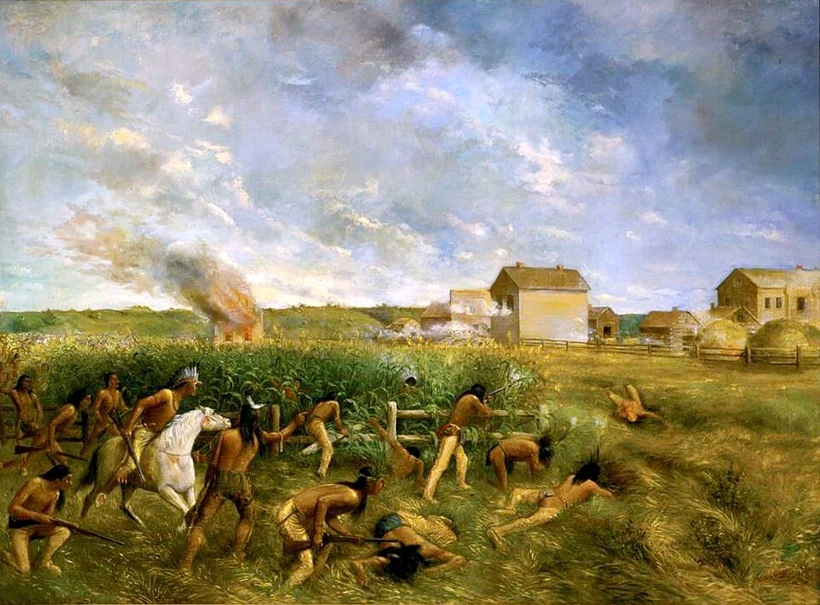
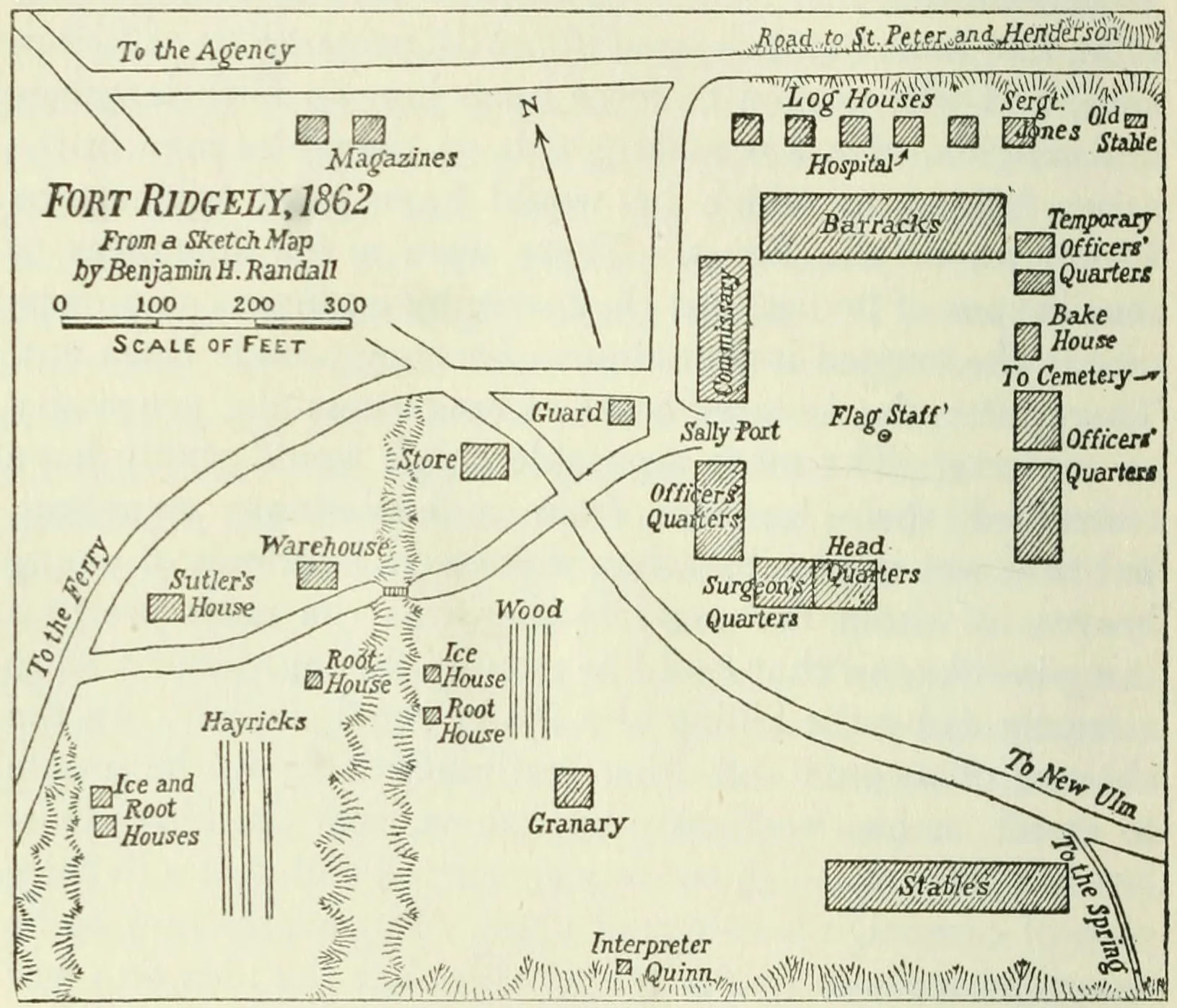
The Sixth formed as the U.S.–Dakota War began. Its companies marched with Sibley from Fort Snelling to Fort Ridgely and fought at Birch Coulee and Wood Lake.
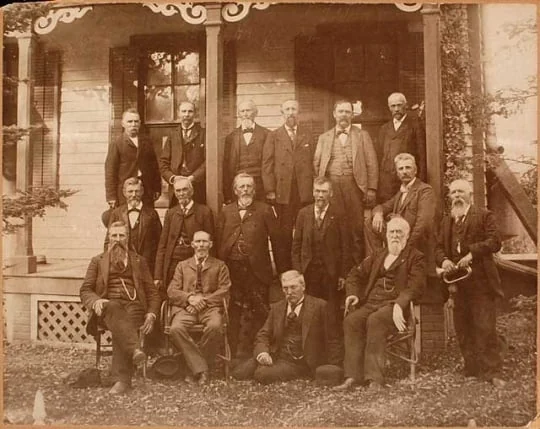
Surviving members of Company F, Sixth Minnesota Infantry, 1897.
Minnesota Historical Society, item 10739645 · Public domainHistory
Fort Snelling to Fort Ridgely
Four companies departed with Sibley on August 20. The first part of the journey went by steamer to Shakopee, then on foot through Belle Plaine to St. Peter. The column gathered supplies and reinforcements and reached Fort Ridgely on August 28. These were newly raised companies with recruits drawn from Minnesota communities.
Birch Coulee and Wood Lake
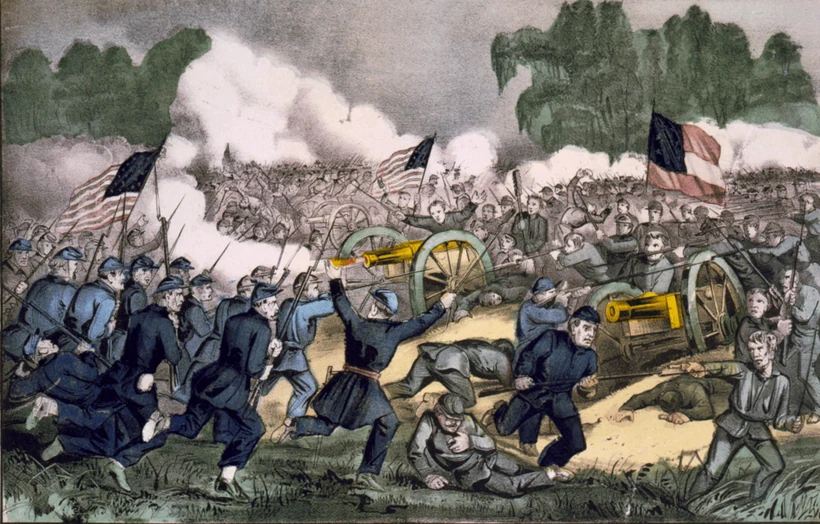
Company A, led by Hiram Grant, formed part of the August 31 burial detail. Dakota fighters surrounded the camp at Birch Coulee until relief reached it September 3. At Wood Lake, Sixth companies supported the attack on the ravine and covered the camp’s opposite flank and rear. The regimental and company accounts describe different parts of the field.
Confinement and the 1863 expedition
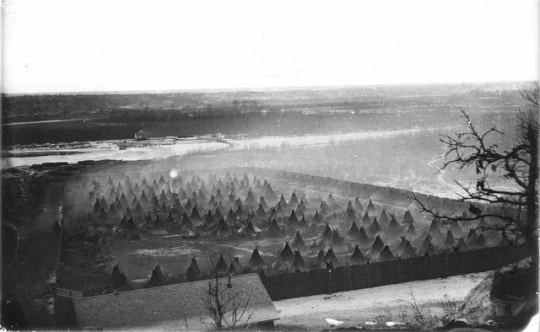
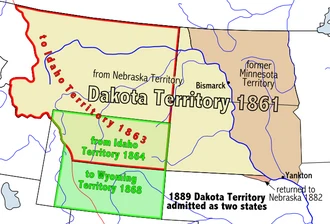
Members of the Sixth guarded the camp at Fort Snelling where Dakota families were confined. The Sixth then marched with Sibley’s 1863 expedition into Dakota Territory and served at frontier posts into 1864.
Helena, St. Louis, and Mobile
The regiment went south in 1864. At Helena, Arkansas, disease caused severe losses. The Sixth later performed duty in St. Louis and joined the 1865 Mobile campaign, including the assault on Fort Blakely. It mustered out in August 1865.
Timeline
August 20–28, 1862Fort Snelling to Fort Ridgely
The first companies moved via Shakopee, Belle Plaine and St. Peter.
September 2–3Birch Coulee
Company A took part in the defense of the camp.
Battle of Birch CouleeView Birch Coulee camp and wagon defenses
September 23Wood Lake
Sixth companies fought on both sides of the camp.
June–September 1863Sibley’s Dakota Territory expedition
The regiment returned to Minnesota after operations toward the Missouri River.
Sibley’s Dakota Territory expeditionView Sibley’s 1863 route in Dakota Territory
April 1865Mobile and Fort Blakely
The Sixth took part in the siege and assault of Fort Blakely.
Images and records
PhotographSixth Minnesota veterans
Surviving members of Company F, Sixth Minnesota Infantry, 1897.
Minnesota Historical Society, item 10739645 · Public domain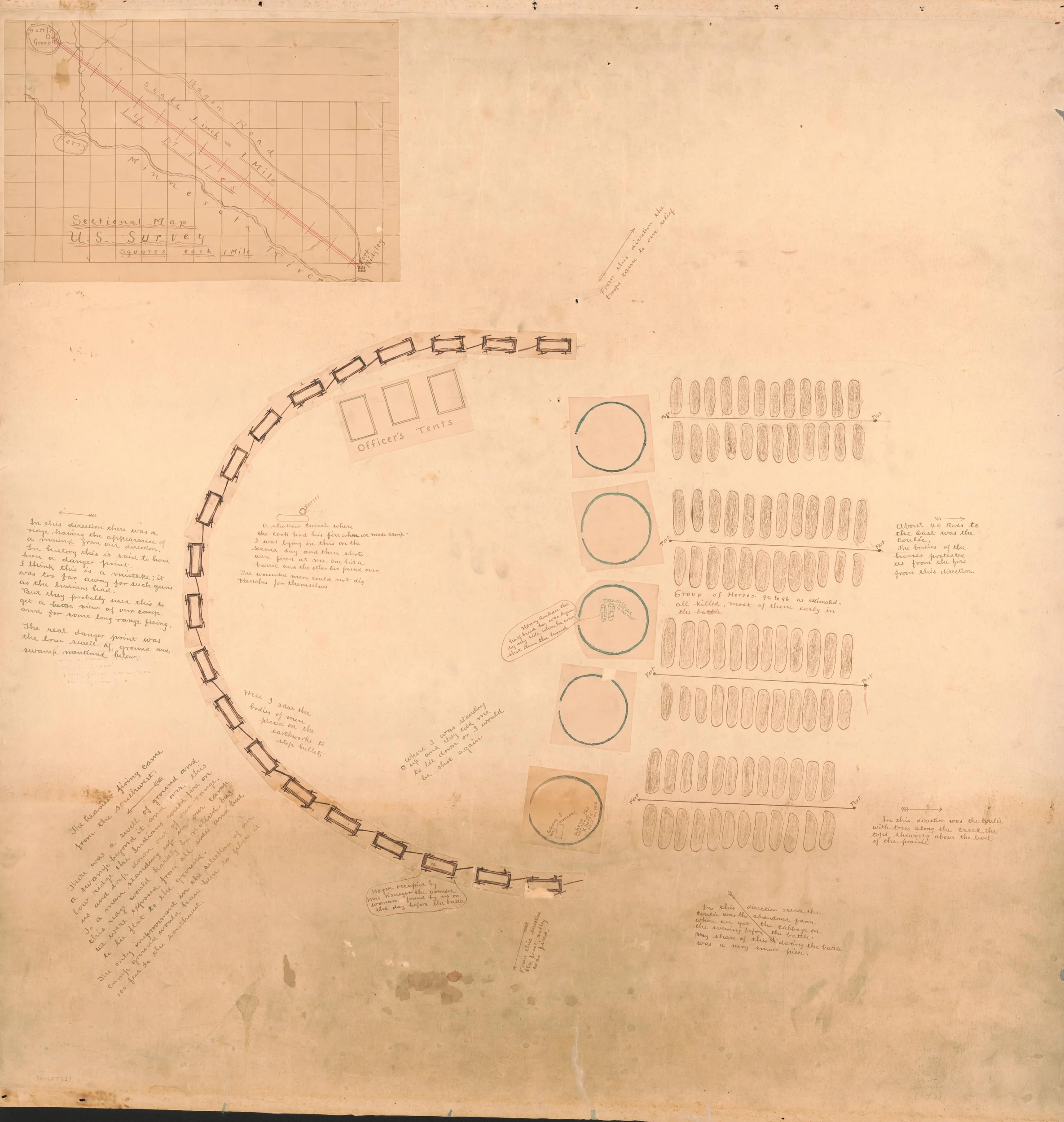
MapBirch Coulee camp and wagon defenses
Veteran Robert K. Boyd drew the camp later in life. The plan locates the wagon perimeter, shelters, tents, and the areas he remembered as sources of fire.
Robert K. Boyd / Library of Congress, Geography and Map Division · Library of Congress identifies no item-specific restrictions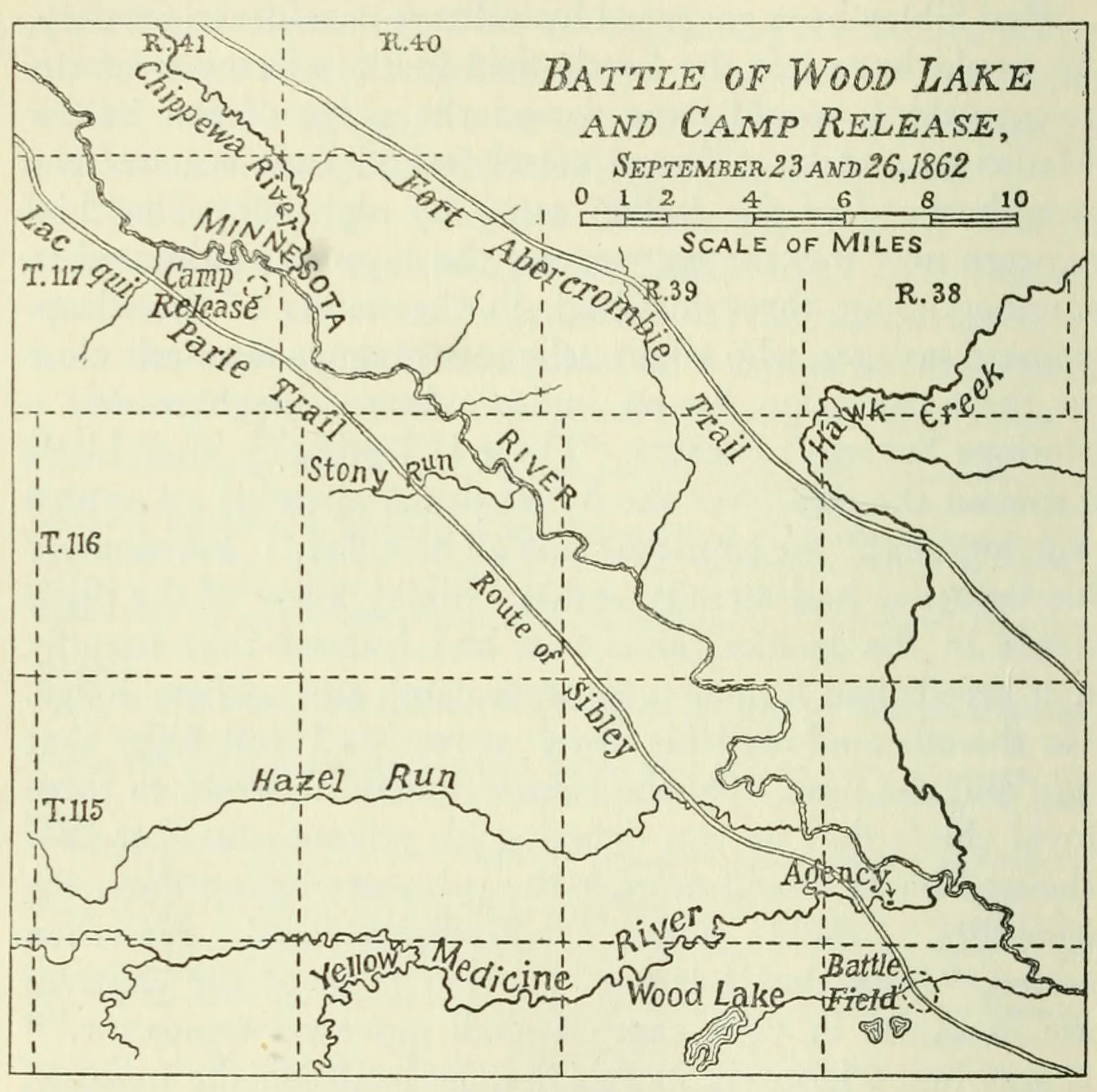
MapWood Lake to Camp Release
A regional map showing Lone Tree Lake, the Upper Agency and the route to Camp Release, opposite the mouth of the Chippewa River.
Warren Upham, in William Watts Folwell’s A History of Minnesota, vol. II (1924), p. 184 · Public domain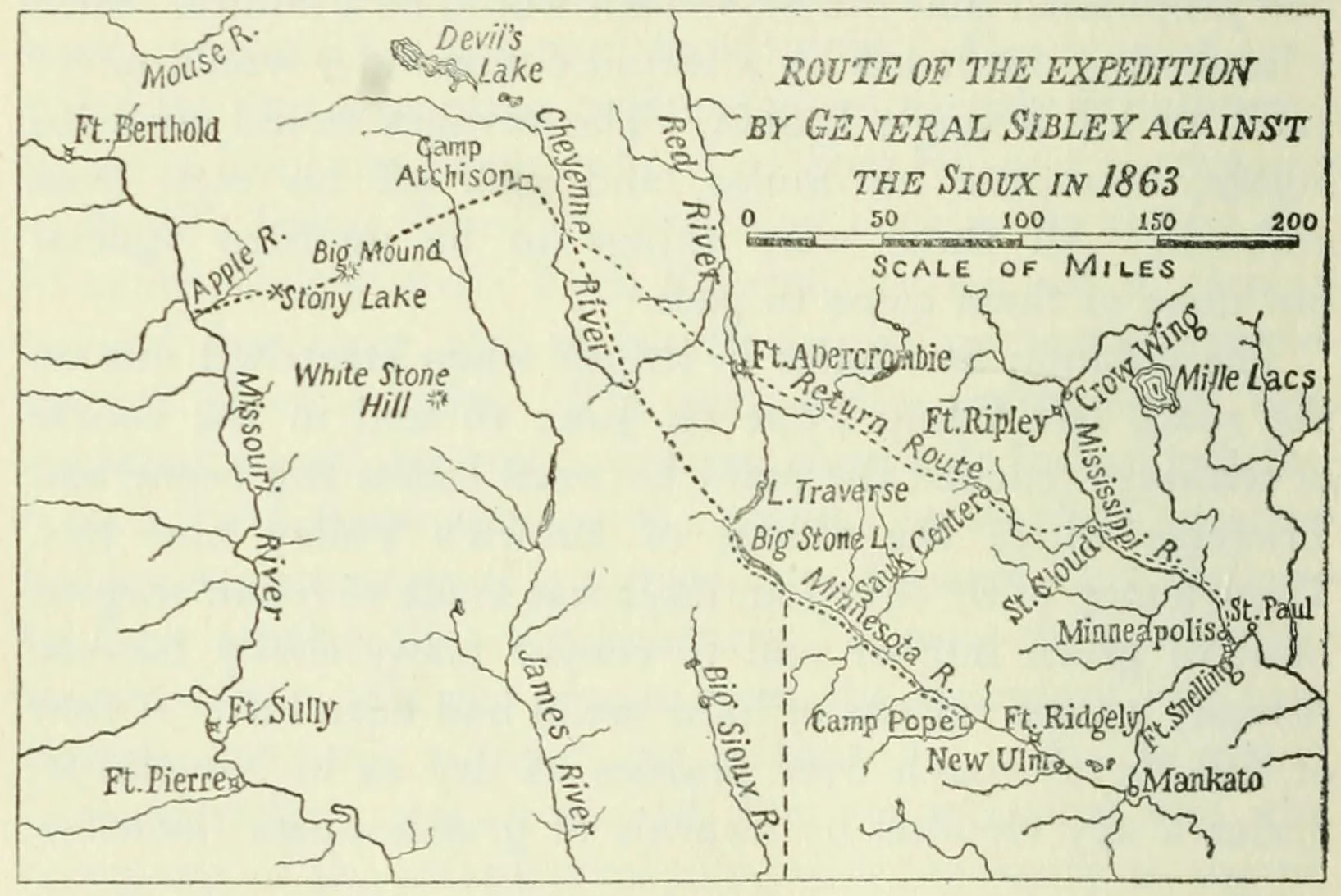
MapSibley’s 1863 route in Dakota Territory
The map traces camps and engagements across present-day North Dakota, west to the Missouri River.
Warren Upham, in William Watts Folwell’s A History of Minnesota, vol. II (1924), p. 268 · Public domainRelated history

Sources
- Archival research guide · Minnesota Historical Society Sixth Minnesota Infantry records
- Military service summary · National Park Service Sixth Minnesota Infantry service record
- Historical interpretation · Minnesota Historical Society Sibley’s 1862 campaign
- Historical account citing dispatches · William Watts Folwell, A History of Minnesota, vol. II Fort Snelling to St. Peter, p. 148
- Military dispatches · Minnesota in the Civil and Indian Wars, vol. II Birch Coulee reports and casualty roll, pp. 212–223
- Sixth Minnesota company history · Pioneer Press Company, 1899 Alfred J. Hill’s Company E history, chapter II
- Military dispatches · Minnesota in the Civil and Indian Wars, vol. II Sibley and Marshall’s Wood Lake dispatches, pp. 240–243
- Official survey and veteran recollections · Minnesota Historical Society Wood Lake Battlefield Commission report and map, PDF pp. 3–6
- Historic site interpretation · Minnesota Historical Society Fort Snelling and the U.S.–Dakota War
- Historic site interpretation · State Historical Society of North Dakota Sibley’s 1863 expedition camps and routes