Defense of Fort Ridgely
August 20 and 22, 1862
The exposed military post sheltered refugees and withstood two Dakota attacks. Its open layout and the surrounding ravines shaped the fighting.
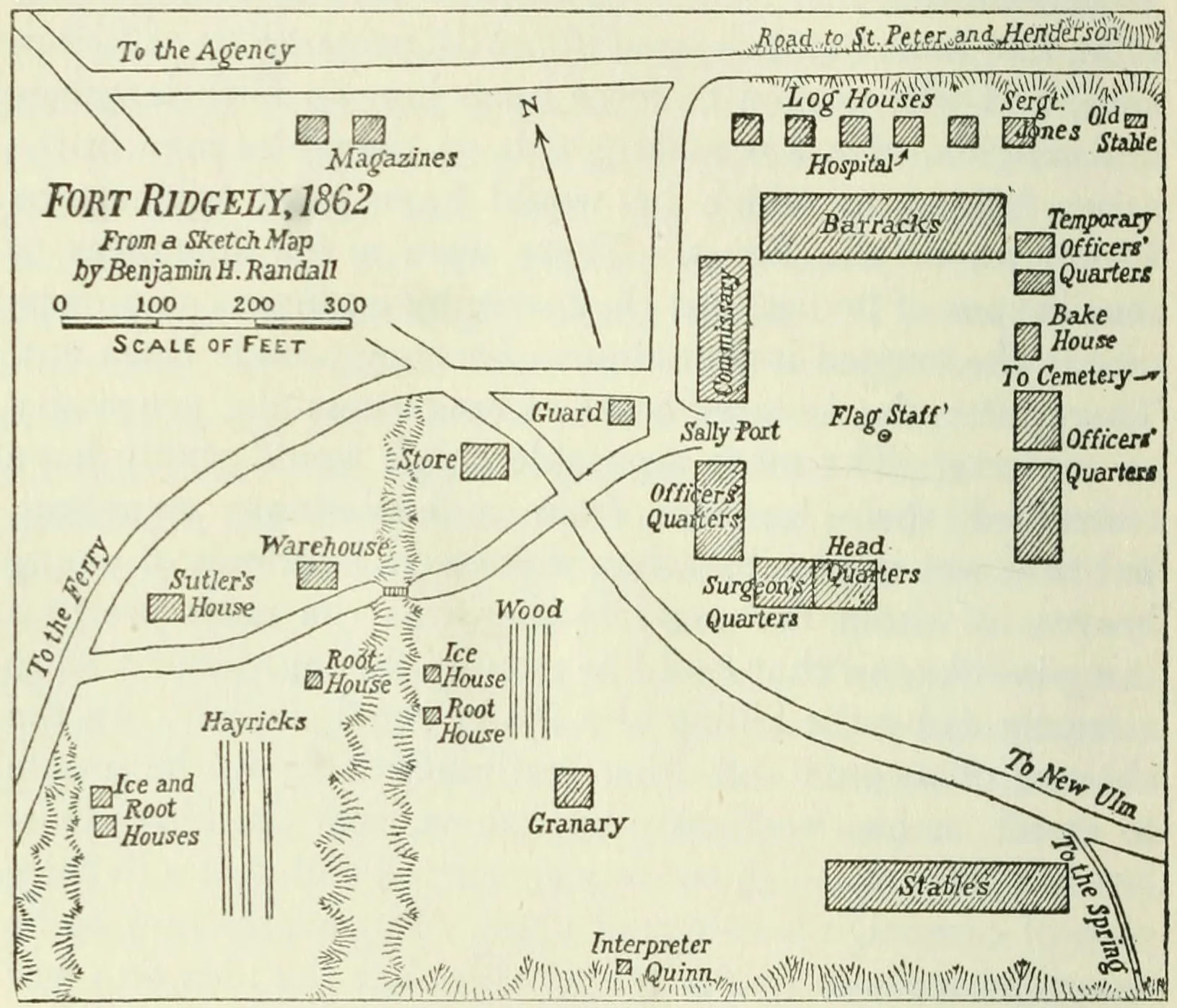
The plan records the open post, its buildings, and the gullies and prairie around it.
Warren Upham, in William Watts Folwell’s A History of Minnesota, vol. II (1924), p. 126 · Public domainHistory
A post and a refuge
After the Redwood Ferry ambush, survivors of Fifth Minnesota Company B returned. Lieutenant Timothy Sheehan and men of Company C hurried back toward the post, and Lieutenant James Gorman commanded the Renville Rangers there. Civilians helped defend the fort or took shelter there.
Ravines and field guns
The post’s buildings stood around an open parade ground. Dakota fighters approached from surrounding ravines and prairie. Defenders used field guns under Ordnance Sergeant John Jones to keep attackers from closing in. Sibley’s Sixth Minnesota and attached companies reached the post August 28, after the attacks.
Timeline
August 18, 1862Redwood Ferry ambush
Captain John Marsh left Fort Ridgely with men of the Fifth Minnesota’s Company B. Dakota fighters ambushed the detachment at the Minnesota River crossing.
August 20 and 22, 1862Defenses at Fort Ridgely
Fifth Minnesota Companies B and C, the Renville Rangers and civilians defended the exposed post. Its field guns helped repel both attacks.
August 28, 1862Sibley reaches Fort Ridgely
After the two attacks, the Sixth and attached companies reached Fort Ridgely and began preparing to move upriver.
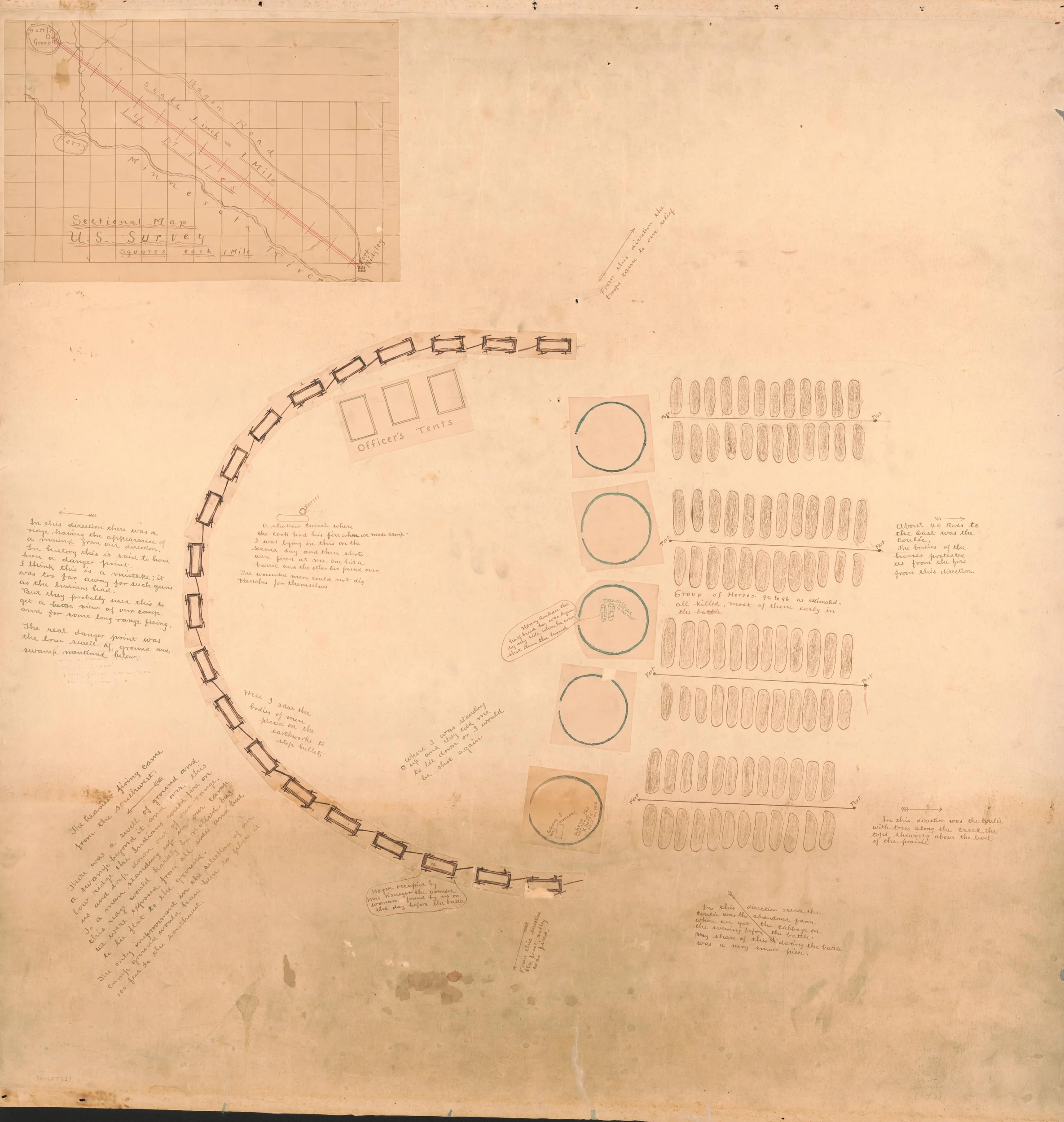
September 2–3, 1862Battle of Birch Coulee
Dakota fighters surrounded a burial and reconnaissance detail after it camped in exposed prairie. A first relief column was checked. Sibley reinforced it and reached the camp on September 3.
Images and records
MapThe Fort Ridgely grounds in 1862
The plan records the open post, its buildings, and the gullies and prairie around it.
Warren Upham, in William Watts Folwell’s A History of Minnesota, vol. II (1924), p. 126 · Public domainRelated history

Sources
- Historic site interpretation · Minnesota Historical Society Fort Ridgely and the U.S.–Dakota War
- Archival research guide · Minnesota Historical Society Fifth Minnesota Infantry records
- Archival research guide · Minnesota Historical Society Minnesota Civil War-era militia records
- Historical map, 1924 · William Watts Folwell, A History of Minnesota, vol. II, p. 126 The Fort Ridgely grounds in 1862
- Historical interpretation · Minnesota Historical Society Sibley’s 1862 campaign
- Battlefield survey · National Park Service, American Battlefield Protection Program Civil War battlefield survey of Minnesota, PDF pp. 22–24
- Historic site interpretation · Minnesota Historical Society Lower Sioux Agency buildings and trails
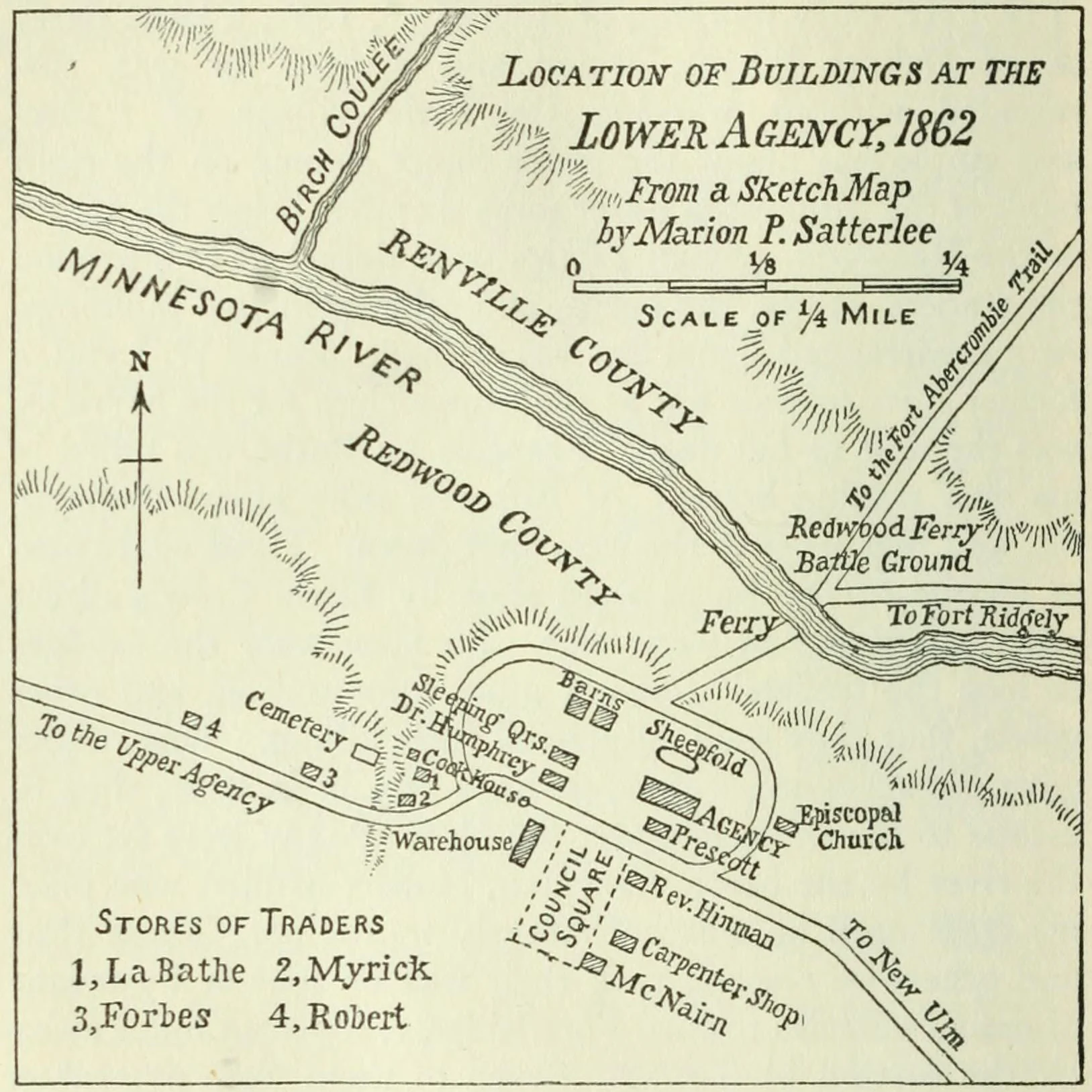
- Historical map, 1924 · William Watts Folwell, A History of Minnesota, vol. II, p. 110 Lower Agency and Redwood Ferry
- State regimental history · Minnesota in the Civil and Indian Wars, vol. I Ninth Minnesota regimental narrative, pp. 416–419
- Military dispatches · Minnesota in the Civil and Indian Wars, vol. II Birch Coulee reports and casualty roll, pp. 212–223
- Dakota eyewitness account · Minnesota Historical Society Collections, 1894 Wamditanka’s recollection, pp. 394–400