Historic Fort Snelling
1820s–1946 as an Army post
Fort Snelling stands at Bdote, the meeting of the Minnesota and Mississippi rivers and a sacred place for Dakota people. The fort’s history includes U.S. expansion, slavery and freedom claims, the forced confinement of Dakota families and training for several wars.
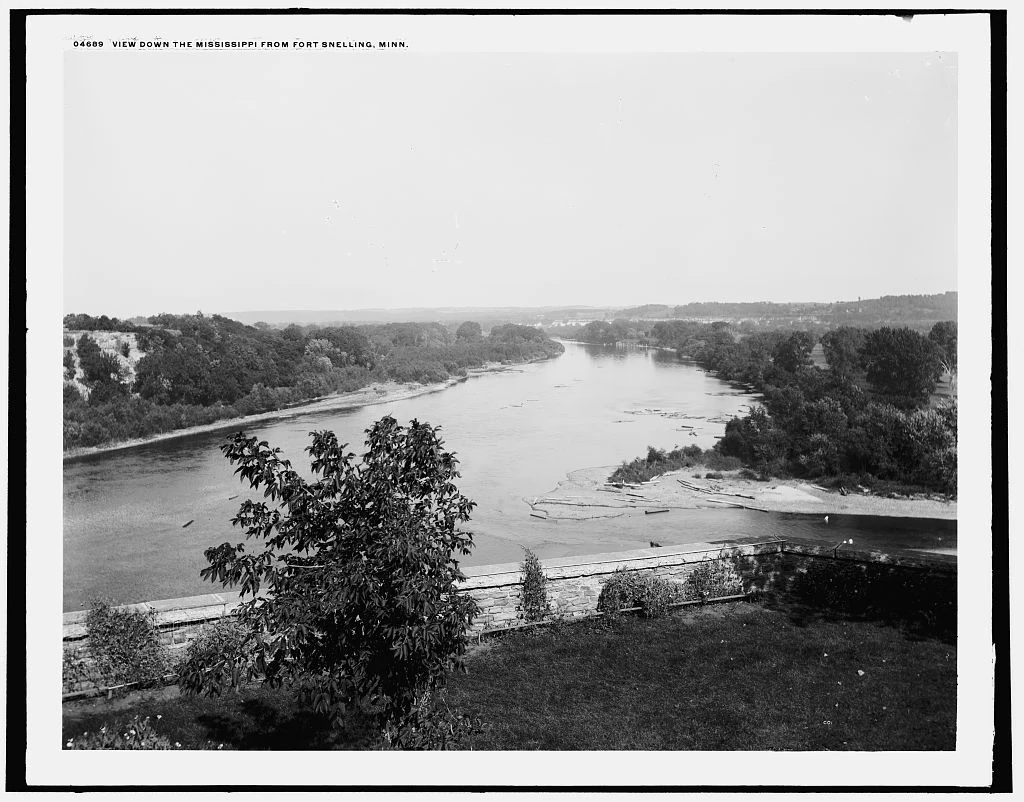
This view down the Mississippi from Fort Snelling was published by the Detroit Publishing Company between 1880 and 1899.
Detroit Publishing Company Collection / Library of Congress, Prints and Photographs Division · Library of Congress reports no known restrictions on publicationHistory
Bdote and the frontier post
The meeting of the Minnesota and Mississippi rivers is known as Bdote. Dakota communities have longstanding ties to this place, which is sacred in Dakota histories and traditions. The U.S. Army started building a permanent fort in 1820 and renamed it for its construction commander, Col. Josiah Snelling, in 1825.
Enslaved people also lived and worked at the post. Dred Scott and Harriet Robinson met and married while enslaved at Fort Snelling. Their time there helped form the basis of the Scotts’ later freedom suits.
Civil War training and Dakota confinement
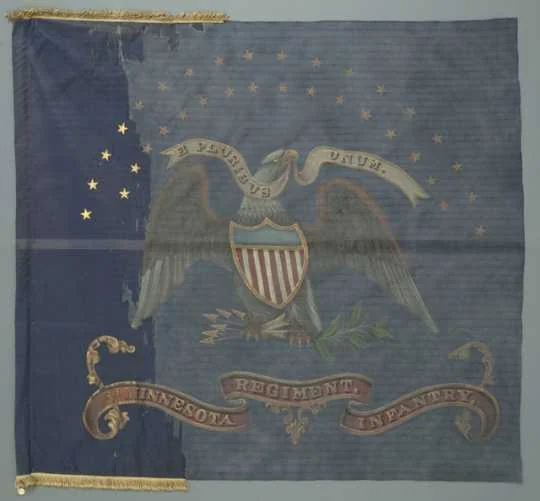
When the Civil War began, Minnesota used Fort Snelling to organize and train Union volunteers. After the U.S.–Dakota War of 1862, the Army confined approximately 1,600 Dakota people, mostly women, children and elders, in a guarded camp below the fort.
Crowding and unsanitary conditions contributed to deaths during the winter of 1862–63. Federal laws then took Dakota lands and authorized forced removal from Minnesota. The Minnesota Historical Society and the National Park Service interpret this history at the site and in their records.
The language school and the end of the Army post
During World War II, Fort Snelling was a major Army processing center. The Military Intelligence Service Language School moved there from Camp Savage in August 1944. Many of its students were Nisei, second-generation Japanese Americans. They trained in translation, interpreting and military intelligence while other Japanese Americans were being forcibly incarcerated.
The school moved to California in 1946. Fort Snelling became Minnesota’s first National Historic Landmark in 1960. The Minnesota Historical Society interprets the site, including its military history and the experiences of Dakota and African American people.
Timeline
1820–1825The Army builds the fort
The Army begins the permanent post at Bdote. Col. Josiah Snelling supervises construction, and the post is renamed for him in 1825.
1830sHarriet Robinson and Dred Scott live at the fort
They meet and marry at Fort Snelling while enslaved. Years later they seek their freedom in court, arguing in part from their residence in free territory.
1861Minnesota mobilizes Union volunteers
The state uses Fort Snelling as an assembly and training post for Union regiments after the start of the Civil War.
1862–1863The Army confines Dakota families
After the U.S.–Dakota War, the Army confines about 1,600 Dakota people below the fort. Many die during the winter. Survivors face forced removal in 1863.
August 1944The Army language school moves to Fort Snelling
The Military Intelligence Service Language School moves from Camp Savage, Minnesota, and trains students in Japanese translation and interpretation.
1946The Army era ends
The wartime post closes, and the Army transfers the language school to the Presidio of Monterey, California.
1960Fort Snelling becomes a National Historic Landmark
It becomes Minnesota’s first National Historic Landmark. The Minnesota Historical Society begins restoring the historic fort later in the decade.
Images and records
PhotographThe river valley from Fort Snelling
This view down the Mississippi from Fort Snelling was published by the Detroit Publishing Company between 1880 and 1899.
Detroit Publishing Company Collection / Library of Congress, Prints and Photographs Division · Library of Congress reports no known restrictions on publication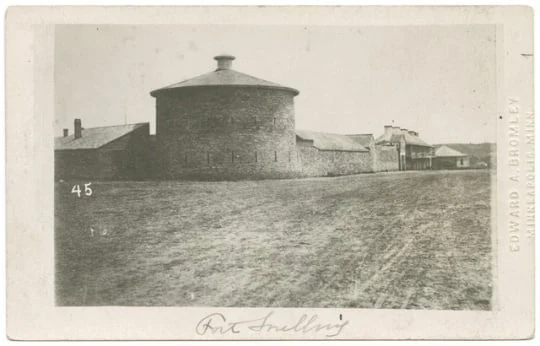
PhotographThe Round Tower in 1863
An 1863 photograph shows the exterior of the fort and the Round Tower with its conical roof.
Minnesota Historical Society · Minnesota Historical Society identifies the photograph as public domain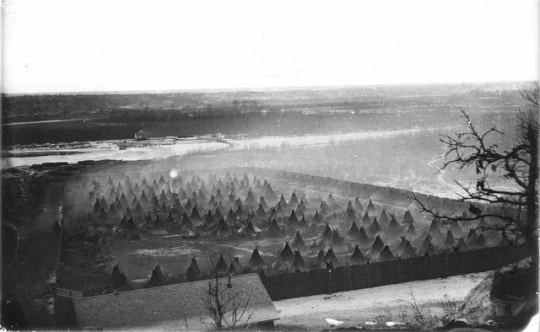
PhotographDakota concentration camp below Fort Snelling
Benjamin Franklin Upton photographed the Dakota concentration camp on the river flats below Fort Snelling around 1862–63.
Benjamin Franklin Upton / Minnesota Historical Society · Minnesota Historical Society identifies the photograph as public domainRelated history

Sources
-
State historical site interpretation · Minnesota Historical Society
Bdote
The confluence, Dakota language and Dakota relationships with this place.
-
State historical timeline · Minnesota Historical Society
Historic Fort Snelling timeline
The fort’s construction, wartime roles and preservation.
-
State historical exhibit · Minnesota Historical Society
Enslaved African Americans and the Fight for Freedom
The people held in slavery at Fort Snelling and their freedom suits.
-
Primary court record · National Archives
Dred Scott v. Sandford
The judgment and historical background to the Scotts’ freedom cases.
-
State historical interpretation · Minnesota Historical Society
The U.S.–Dakota War of 1862
The war, forced removal and the concentration camp below the fort.
-
State historical reference · Minnesota Historical Society, MNopedia
Fort Snelling in the Civil and U.S.–Dakota Wars, 1861–1866
Union regiments, the Dakota camp and primary photographs with credits.
-
Official landmark interpretation · National Park Service
Historic Fort Snelling
The fort’s military uses and landmark designation.
-
Official historical exhibit · National Park Service
Fort Snelling: Breaking the Code
The Military Intelligence Service Language School, its students and courses.
-
Archival finding aid · National Archives
Records of the Army Staff
Record Group 319 documents the language school’s transfer to Fort Snelling and later to Monterey.
- Archival photograph · Library of Congress View down the Mississippi from Fort Snelling