Fort Sill
1869–present
This U.S. Army post north of Lawton, Oklahoma, connects the history of the Southern Plains and the forced relocation of the Chiricahua Apache with the development of field artillery, military aviation and air defense.
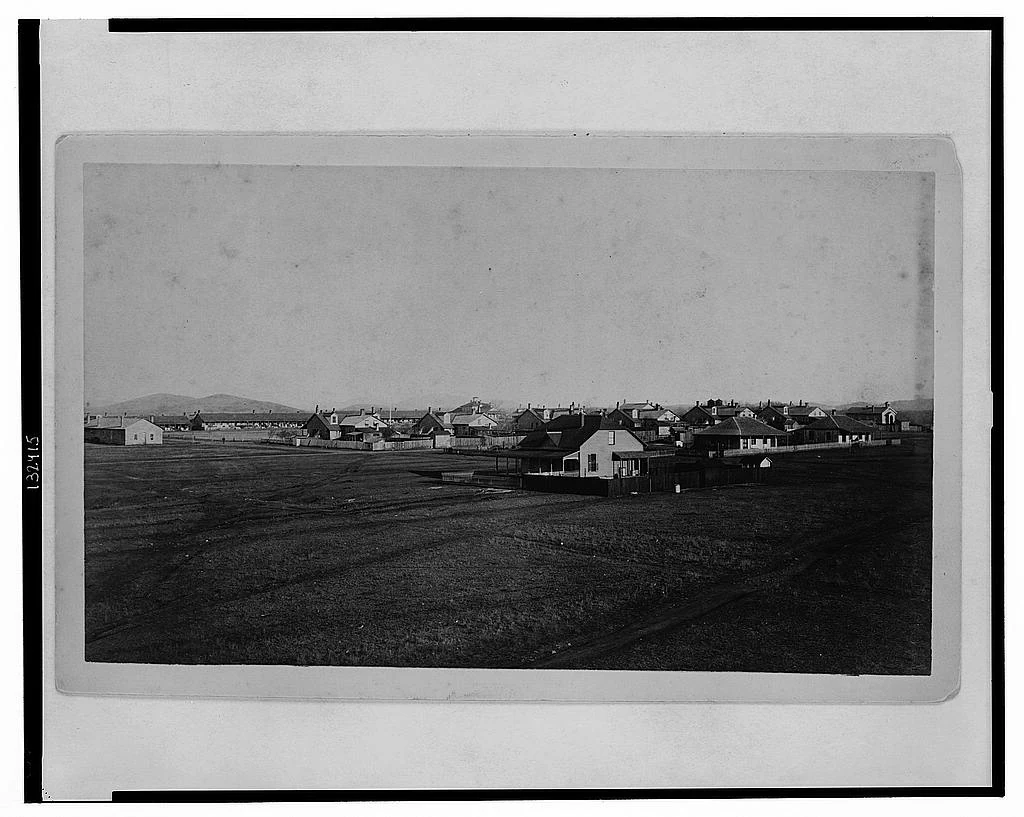
This December 1889 photograph looks across the buildings of Fort Sill in what was then Indian Territory.
Caleb Henry Carlton collection / Library of Congress, Prints and Photographs Division · Library of Congress reports no known restrictions on publicationHistory
The Southern Plains before and after the post
Wichita people lived near Medicine Creek before the Army built the post, in a region also home to Kiowa and Comanche communities. Soldiers who built the permanent post in 1869 included men of the 10th Cavalry and the 6th Infantry. Fort Sill troops later fought in the Red River War of 1874–75, part of the Army’s campaign to bring Southern Plains nations under federal control.
In 1894, the United States transferred Chiricahua Apache prisoners of war to Fort Sill after years of imprisonment in Florida and Alabama. Among them was Geronimo, a Chiricahua medicine man and warrior. At the end of prisoner-of-war status in 1913, many families moved to the Mescalero Apache Reservation in New Mexico. Families that stayed in Oklahoma settled on allotments near Fort Sill. Their descendants are part of the Fort Sill Apache Tribe today.
Training observers and artillery crews
The School of Fire taught officers how to direct artillery fire and use new weapons. Its original schoolhouse still stands. Army aircraft tried observing artillery fire as early as 1912. The 1st Aero Squadron continued the work at Fort Sill in 1915, and World War I brought a balloon school for pilots and observers at Post Field.
The post trained the 45th Infantry Division during World War II and expanded training for artillery replacements. In 1942, the War Department authorized field artillery units to use their own aerial observers. They could spot where rounds landed, report what they saw and help crews correct their aim.
From gun crews to guided missiles
Fort Sill took on rocket and missile work in the early Cold War. Two guns went from the post to Nevada for a 1953 nuclear artillery test. The gun that fired the test round is now among the objects interpreted by the U.S. Army Field Artillery Museum.
The Air Defense Artillery School moved from Fort Bliss to Fort Sill during the 2005 base realignment. Today the two artillery schools train soldiers in distinct missions. Field artillery supports forces on the ground, while air defense artillery protects them from airborne threats.
Timeline
January 8, 1869The Army establishes the post
The Army sets up the post southeast of the Wichita Mountains. The original headquarters building serves the post from 1870 through 1911.
1894Chiricahua Apache prisoners are transferred
The Army brings Chiricahua Apache prisoners and their families to Fort Sill after years of exile at Fort Marion and Fort Pickens in Florida and at Mount Vernon Barracks in Alabama.
1909Geronimo dies at Fort Sill
The Chiricahua leader dies in captivity and is buried at Fort Sill. The Army visitor map marks his grave in the Beef Creek Apache Cemetery.
1911The School of Fire opens
A War Department order establishes the school on June 3. It opens in September with Capt. Dan T. Moore as its first commandant.
1913Prisoner-of-war status ends
After 27 years in captivity, roughly two-thirds of the Chiricahua prisoners move to the Mescalero Apache Reservation. The families who stay in Oklahoma settle on allotments near Fort Sill.
1915–1917Aircraft and balloons support artillery training
The 1st Aero Squadron works at Fort Sill in 1915. Construction of Henry Post Army Airfield starts on August 8, 1917, and the Army begins training balloon crews and artillery observers at the field.
May 25, 1953A Fort Sill gun fires a nuclear shell in Nevada
The Grable test at the Nevada Proving Ground uses a 280 mm M65 cannon brought from Fort Sill. The shot is part of Operation Upshot–Knothole.
June 30, 2009Air Defense Artillery Center colors are uncased
A ceremony marks the transfer of the Army’s Air Defense Artillery School to Fort Sill, where it joins the Field Artillery School in the Fires Center of Excellence.
Images and records
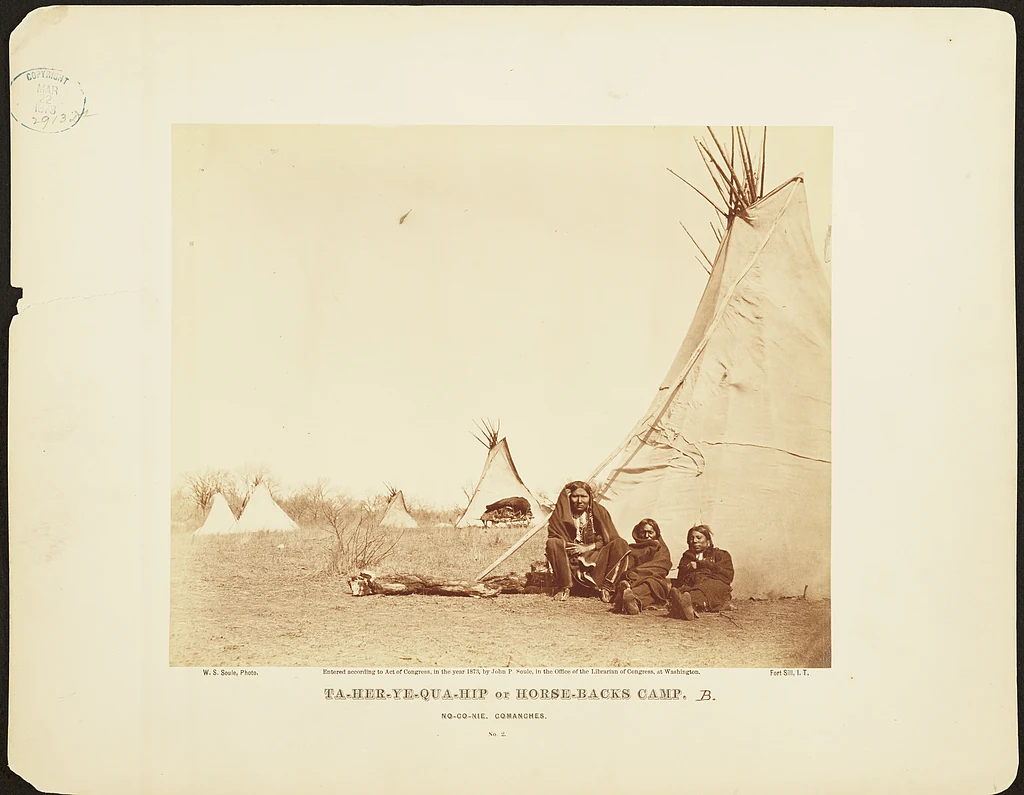
PhotographNo-Co-Nie Comanche camp near Fort Sill
Three No-Co-Nie Comanche men outside a lodge at Horse-Back’s camp near Fort Sill, around March 1873.
William S. Soule / Library of Congress, Prints and Photographs Division · Library of Congress reports no known restrictions on publication
PhotographFort Sill from the southeast
This December 1889 photograph looks across the buildings of Fort Sill in what was then Indian Territory.
Caleb Henry Carlton collection / Library of Congress, Prints and Photographs Division · Library of Congress reports no known restrictions on publication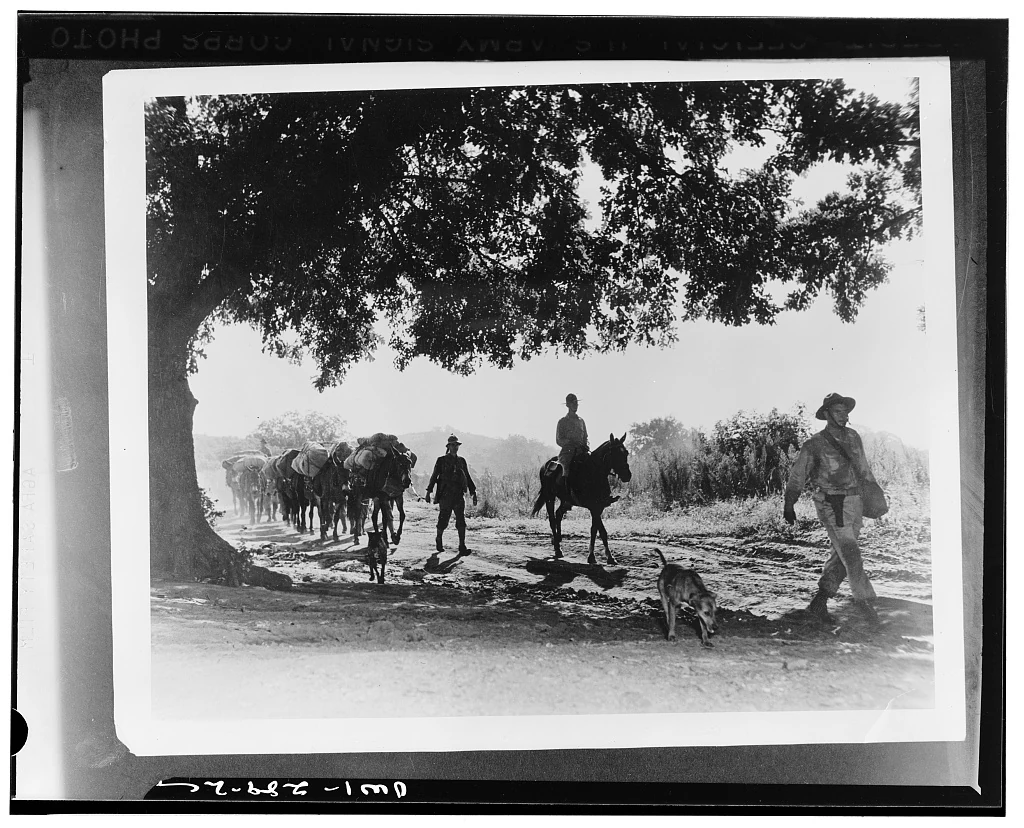
PhotographMule-pack artillery trainees
Soldiers of Battery C, 26th Battalion, at the Field Artillery Replacement Training Center, around 1942.
U.S. Army Signal Corps / Library of Congress, FSA–OWI Collection · U.S. government photograph in the public domain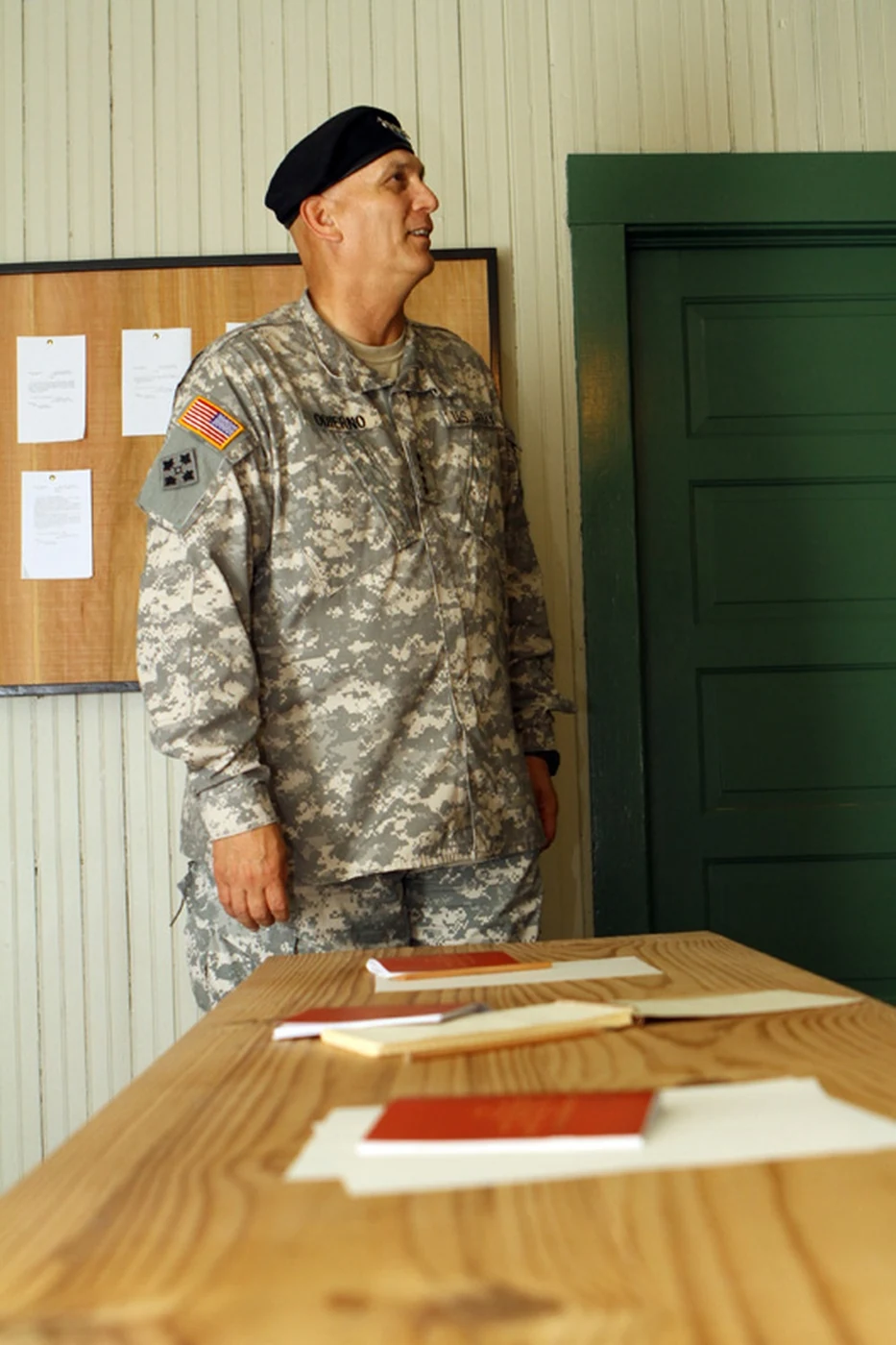
PhotographInside the original artillery schoolhouse
Gen. Raymond T. Odierno looks inside the three-room structure built for the original School of Fire in 1911. Photographed in May 2011.
Keith Pannell / U.S. Army, via DVIDS · DVIDS identifies the photograph as public domainRelated history

Sources
-
Official history · National Park Service
Washita Battlefield historical questions
Dates the establishment of the post and places it southeast of the Wichita Mountains.
-
State historical reference · Oklahoma Historical Society
Fort Sill
Regional context, the first garrison, the Red River War and twentieth-century training.
-
Tribal history · Fort Sill Apache Tribe
History of the Fort Sill Apache Tribe
The Tribe’s account of imprisonment, transfer, allotments and its community today.
-
Official history · National Park Service
After the Apache Wars
Chiricahua imprisonment, forced relocations and release in 1913.
-
Official site interpretation · National Park Service
Apache Prisoners at Fort Pickens
The detention of Geronimo and others in Florida and his death at Fort Sill.
-
Archival finding aid · National Archives
Records of the Artillery School
Section 337.9.5 cites the 1911 War Department order and later redesignations.
-
Official installation and branch history · U.S. Army
Fires Center of Excellence and Fort Sill
The Field Artillery School, fire direction and aviation, and the present-day schools.
-
Official history · U.S. Army
A look back at Fort Sill’s early aviation days
The 1st Aero Squadron, construction of Post Field and the Army balloon school.
-
Contemporary Army report · U.S. Army
Air Defense Artillery colors uncased at Fort Sill
The June 2009 ceremony and the move from Fort Bliss.
-
Official artifact history · U.S. Army
Atomic Annie on the move
Fort Sill’s guns, their transfer to Nevada and the return of the test gun.
-
Official program history · U.S. Department of Energy
Atmospheric Nuclear Weapons Testing, 1951–1963
Dates and describes the Grable test in Nevada.
-
Official museum · U.S. Army Center of Military History
Fort Sill National Historic Landmark and Museum
The Old Post Quadrangle, the museum’s history and visiting information.
-
Official museum · U.S. Army Center of Military History
U.S. Army Artillery Museum
Galleries, artillery pieces and access information.
-
Official map · U.S. Army MWR
Fort Sill visitor map
Shows the Old Post Quadrangle, museums, cemetery and Henry Post Army Airfield.
-
Historic landmark record · National Park Service
Fort Sill National Historic Landmark registration
The designation file describes the fort’s buildings and historical significance.
-
Historic American Buildings Survey · Library of Congress
Fort Sill Old Post Headquarters survey
Historical and architectural documentation for the headquarters.
- Archival photograph · Library of Congress Ta-Her-Ye-Qua-Hip or Horse-Back’s Camp
- Archival photograph · Library of Congress Fort Sill, Indian Territory, from the southeast
- Archival photograph · Library of Congress Mule-pack artillery trainees at Fort Sill
- Official photograph · Defense Visual Information Distribution Service Army general inspects the original Field Artillery School
Veteran roster
Service references come from the wall inscriptions and approved public profiles.
2 veterans
| Veteran | Rank or rating | Military unit | Service period | Decorations, bases and places |
|---|---|---|---|---|
| Dora Erickson Wall marked 6 · row 9, position 5 Highlight on the wall | Staff Sergeant (U.S. Army) | — | — | Fort Sill Oklahoma |
| Gerald O. Lehn | Staff Sergeant (U.S. Army) | — | Korean War era, according to family recollections. Exact service dates are open. Korean War |
Fort Sill Cambridge, Minnesota Minnesota |