151st Field Artillery Regiment
1864 to the present
The Minnesota Army National Guard regiment known as the Gopher Gunners traces its roots to Civil War heavy artillery. Its history stretches from Chattanooga and the First World War to training, overseas deployments, and disaster response.
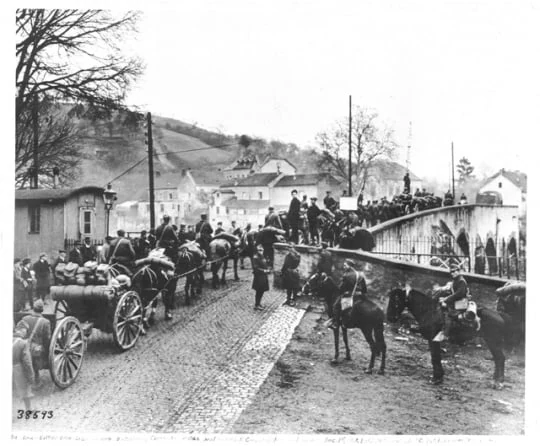
The regiment crossed from Luxembourg into Germany at Echternach on December 3, 1918, as part of the occupation after the armistice.
U.S. Army Signal Corps · Minnesota Military Museum, via Minnesota Historical Society · U.S. public domainHistory
From Chattanooga to the Rainbow Division
The Army traces the regiment to heavy artillery volunteers organized in 1864. The regiment served at Chattanooga, Tennessee, before leaving federal service in September 1865.
In 1917 the Minnesota artillery regiment became the 151st Field Artillery in the 42nd Rainbow Division. It fought in France during the Aisne-Marne, St. Mihiel, and Meuse-Argonne campaigns, among others. After the armistice, the regiment crossed from Luxembourg into Germany for occupation duty.
North Africa, Italy, and training for Korea
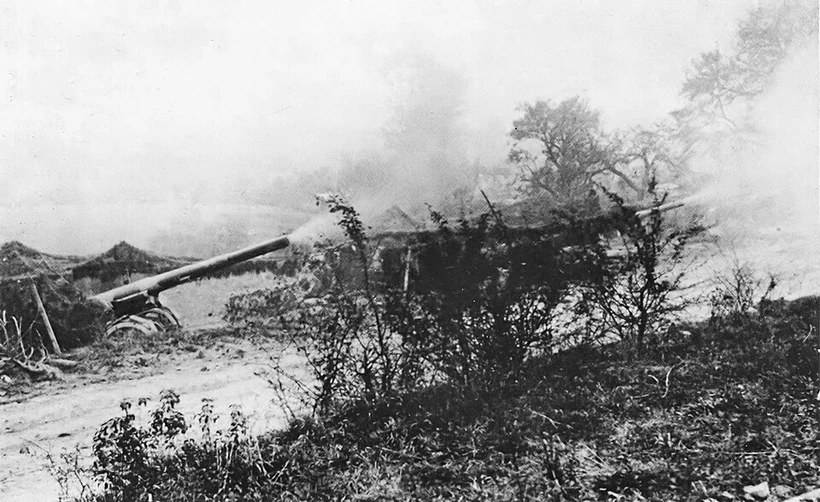
The regiment was divided in 1942. Its first battalion became the 151st Field Artillery Battalion and its second the 175th Field Artillery Battalion. With the 34th Infantry Division, the 151st trained in Northern Ireland and served in Tunisia. At Salerno in September 1943, its artillery came ashore in the fifth and sixth waves while the battalion was attached to the 36th Infantry Division.
After World War II, the 151st was reestablished in the Guard with headquarters at Minneapolis and assigned to the 47th Infantry Division. It entered active federal service in 1951 and trained replacements at Camp Rucker, Alabama. The Army records its return to state control in December 1954.
Cambridge, Montevideo, and service at home
In 1997 the regiment was organized with the 1st Battalion and Batteries E and F. Battery F entered active federal service from Cambridge in 2003. The current Minnesota Guard unit page gives the 1st Battalion headquarters as Montevideo.
In 2007, soldiers from the 1st Battalion helped with flood relief in the Caledonia area. A later deployment in 2009 included convoy security and force protection in Kuwait and Iraq. The battalion's state and federal missions are part of the same Guard history.
The Rio Grande and the guns of the Rainbow Division
Before World War I, Minnesota's field artillery organized three firing batteries in St. Paul and three in Minneapolis. During the 1916 mobilization on the border with Mexico, the regiment went to Camp Llano Grande in southern Texas, where it trained and patrolled near the Rio Grande.
In France the Gopher Gunners used French 75-mm guns. They supported the 42nd Division through six campaigns: Lorraine, Champagne, Champagne-Marne, Aisne-Marne, St. Mihiel and Meuse-Argonne.
From a British 25-pounder to an American 105
In Northern Ireland, the 151st Field Artillery Battalion trained on British 25-pounder guns and took them into combat in Tunisia in 1943. After the Salerno landings it rejoined the 34th Infantry Division and supported the Allied advance through Italy with American M2 105-mm howitzers. Its campaigns included Anzio, the northern Apennines and the Po Valley.
The wartime regiment's 1942 reorganization also sent its Headquarters Battery to the 634th Tank Destroyer Battalion, where it eventually became the Reconnaissance Company. In 1946 that company and elements of the wartime artillery battalions reunited in the Minnesota Guard. The Army records another consolidation with the 175th Field Artillery in 1992.
Further Guard service
The 1st Battalion served in Iraq in 2005–2006 before its later deployment to Kuwait and Iraq. The battalion also served in Minnesota. Its Guard's annual report records soldiers mobilized for Operation Safety Net in 2021, and a Minnesota Guard photograph shows soldiers from the 151st and 194th Field Artillery working with M777 howitzers during annual training at Camp Ripley that July.
Timeline
1864–1865Minnesota raises heavy artillery volunteers
The 1st Battalion, Heavy Artillery, expanded into a regiment and served at Chattanooga before its 1865 muster-out.
1916–1917Texas border service
Minnesota's field artillery mobilized and trained near the Rio Grande before World War I.
August 18, 1917The 151st joins the Rainbow Division
The Minnesota unit took the 151st name and joined the 42nd Division. It served in six First World War campaigns listed by the Army.
December 3, 1918Across the Sauer
After the armistice, the regiment crossed the Sauer River at Echternach from Luxembourg into Germany.
World War IView 151st Field Artillery crossing the Sauer River
February–May 1943British guns in Tunisia
The battalion used the 25-pounders it had trained on in Northern Ireland.
September 9, 1943Guns come ashore at Salerno
Guns from the 151st Battalion landed in the fifth and sixth assault waves to support the beachhead in Italy.
1943–1945Artillery support in Italy
The 151st used American 105-mm howitzers in campaigns including Anzio and the Po Valley.
October 14, 1946Reconnaissance Company returns to the artillery lineage
The Army consolidated the 634th Tank Destroyer Battalion's Reconnaissance Company with Minnesota field artillery elements.
1951–1954Wartime training at Camp Rucker
The 151st entered federal service in January 1951 and trained replacements. It reverted to state control on December 2, 1954.
2003–2004Cambridge's Battery F enters federal service
Battery F was ordered to active federal service from Cambridge on August 10, 2003 and reverted to state control on August 8, 2004.
2005–20061st Battalion deploys to Iraq
August 2007Flood relief in southeast Minnesota
Guard soldiers from the battalion went to the Caledonia area to support relief after severe flooding.
2009–2010Convoy security in Kuwait and Iraq
The 1st Battalion deployed more than 500 soldiers for convoy security and force protection.
July 2021Annual training at Camp Ripley
Soldiers from the 151st and 194th Field Artillery trained with M777 howitzers in Minnesota.
Images and records
Photograph151st Field Artillery crossing the Sauer River
The regiment crossed from Luxembourg into Germany at Echternach on December 3, 1918, as part of the occupation after the armistice.
U.S. Army Signal Corps · Minnesota Military Museum, via Minnesota Historical Society · U.S. public domain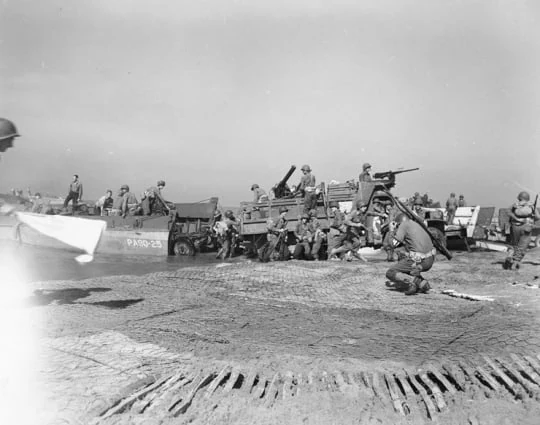
PhotographThe Salerno landings, September 1943
Equipment is unloaded from an amphibious DUKW during Operation Avalanche. The 151st supported the landings. This scene illustrates the operation.
U.S. Army Signal Corps · National Archives, via Minnesota Historical Society · U.S. public domain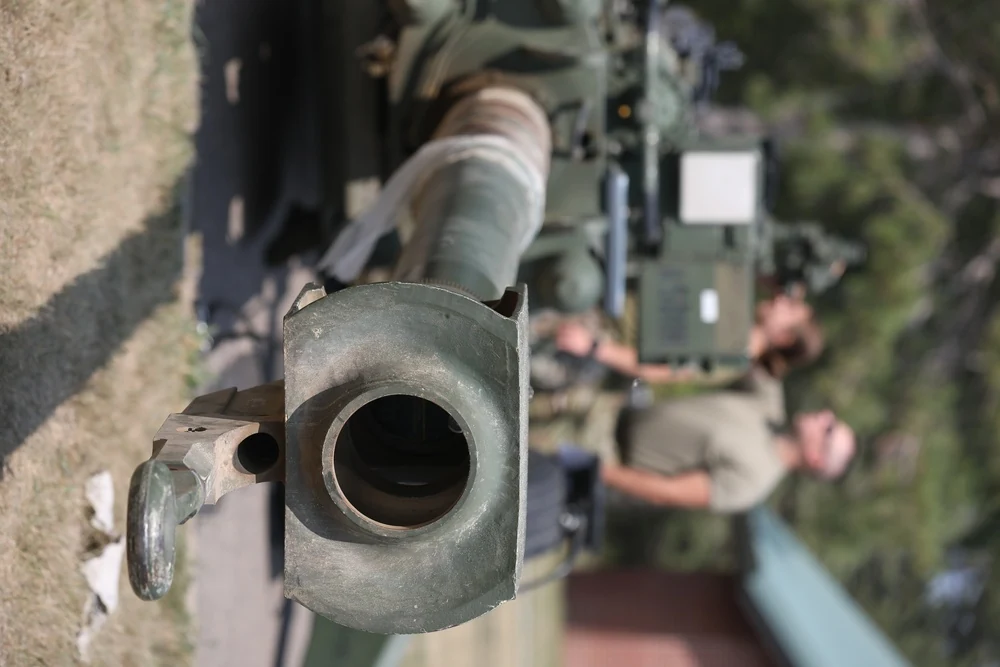
PhotographTraining with M777 howitzers
Soldiers from the 194th and 151st Field Artillery Regiments train with M777 howitzers at Camp Ripley in 2021.
Spc. Jorden Newbanks · Minnesota National Guard / DVIDS · U.S. public domainRelated history







Sources
-
Official lineage · U.S. Army Center of Military History
151st Field Artillery Regiment lineage and honors
Certificate dated April 30, 2012. Includes designation changes, mobilizations, campaign credit, and decorations.
-
Army Lineage Series · U.S. Army Center of Military History
Field Artillery, Part 2
Printed pp. 1196–1199 explain heraldry, reorganizations, and separate battery campaign credits.
-
Research guide · U.S. Army Center of Military History
How to use a lineage and honors certificate
Explains how to interpret organizational continuity, honors, and dates.
-
Unit history and photo collection · Minnesota Historical Society
151st Field Artillery Regiment
Connects the official lineage with training, deployments, images, and further reading.
-
Archive research guide · Minnesota Historical Society
First Minnesota Heavy Artillery
Locates letters, rolls, and histories of the Civil War organization.
-
Battlefield tour · American Battle Monuments Commission
Aisne-Marne offensive battlefield tour
Follows the 42nd Division through the July 1918 offensive.
-
Campaign history · U.S. Army Center of Military History
Salerno · American operations from the beaches to the Volturno
Printed p. 24 identifies the 151st guns landing with the fifth and sixth waves.
-
Guard timeline · Minnesota National Guard
Minnesota National Guard milestones
Describes the 42nd, 34th, and 47th Infantry Divisions in the Guard's history.
-
Staff lineage · Minnesota National Guard
Minnesota National Guard staff lineages
Includes several 151st batteries, with dates where documented.
-
Guard unit profile · Minnesota National Guard
1st Battalion, 151st Field Artillery Regiment
Describes the Montevideo headquarters, the battalion's missions, and overseas deployments.
-
Military news · Minnesota National Guard
Guard supports flood relief in Minnesota
2007 account of the 151st's assignment to the Caledonia area.
-
Military photograph · Defense Visual Information Distribution Service
194th and 151st Field Artillery conduct annual training
Public-domain image by Spc. Jorden Newbanks. The caption and date field differ on the month, so the display uses the year.
- Official history · Minnesota Historical Society, MNopedia 151st Field Artillery Regiment
-
Official lineage · U.S. Army Center of Military History
Field Artillery, Part 2
See the 151st Field Artillery Regiment, printed pages 1196–1198.
-
Official report · Minnesota National Guard
Minnesota National Guard 2021 Annual Report
See 84th Troop Command, printed pages 30–31.
- Contemporary photograph · Minnesota National Guard via DVIDS 194th and 151st FA conduct annual training