Camp Release
September 26–28, 1862
Dakota people who opposed the war protected captives and arranged their release. The army reached the site across from the mouth of the Chippewa River on September 26.
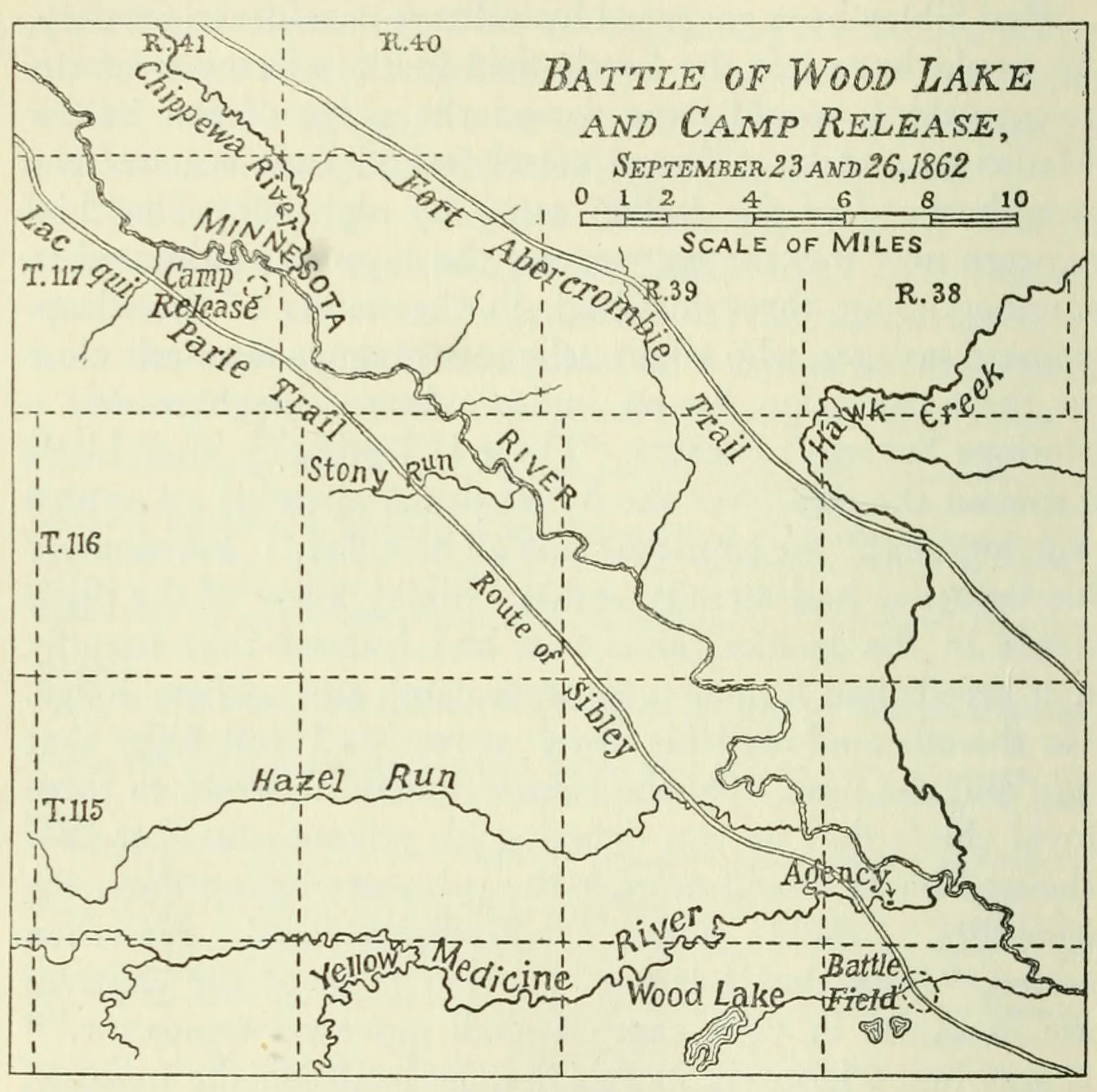
A regional map showing Lone Tree Lake, the Upper Agency and the route to Camp Release, opposite the mouth of the Chippewa River.
Warren Upham, in William Watts Folwell’s A History of Minnesota, vol. II (1924), p. 184 · Public domainHistory
The Dakota Peace Party
Leaders including Maza Ša (Red Iron), Tiwakan (Gabriel Renville), and others worked to protect captives and find an end to the fighting. Their decisions shaped events before the army reached the area. The voices in Mni Sota Wakpa Stories and Reflections describe the choices facing Dakota families.
Release followed by military custody
Captives were turned over on September 26. Sibley took Dakota people into military custody. Trials began two days later. For many Dakota who had sought peace, the end of the fighting led into confinement, removal, and exile.
Timeline
September 25, 1862Upper Agency at Yellow Medicine
A Seventh Minnesota diary records that the column camped beyond the former Upper Agency. In August, Aŋpétu Tȟokéča (John Other Day) had led people from the agency to safety.
September 26, 1862Camp Release
The Dakota Peace Party had protected captives. It arranged their release when Sibley’s command reached the area across from the mouth of the Chippewa River. The military then held Dakota people there and began trials.
September 28Military trials begin
The commission began trying Dakota men after the captive release. Its procedures and authority have long been questioned.
Images and records
MapWood Lake to Camp Release
A regional map showing Lone Tree Lake, the Upper Agency and the route to Camp Release, opposite the mouth of the Chippewa River.
Warren Upham, in William Watts Folwell’s A History of Minnesota, vol. II (1924), p. 184 · Public domain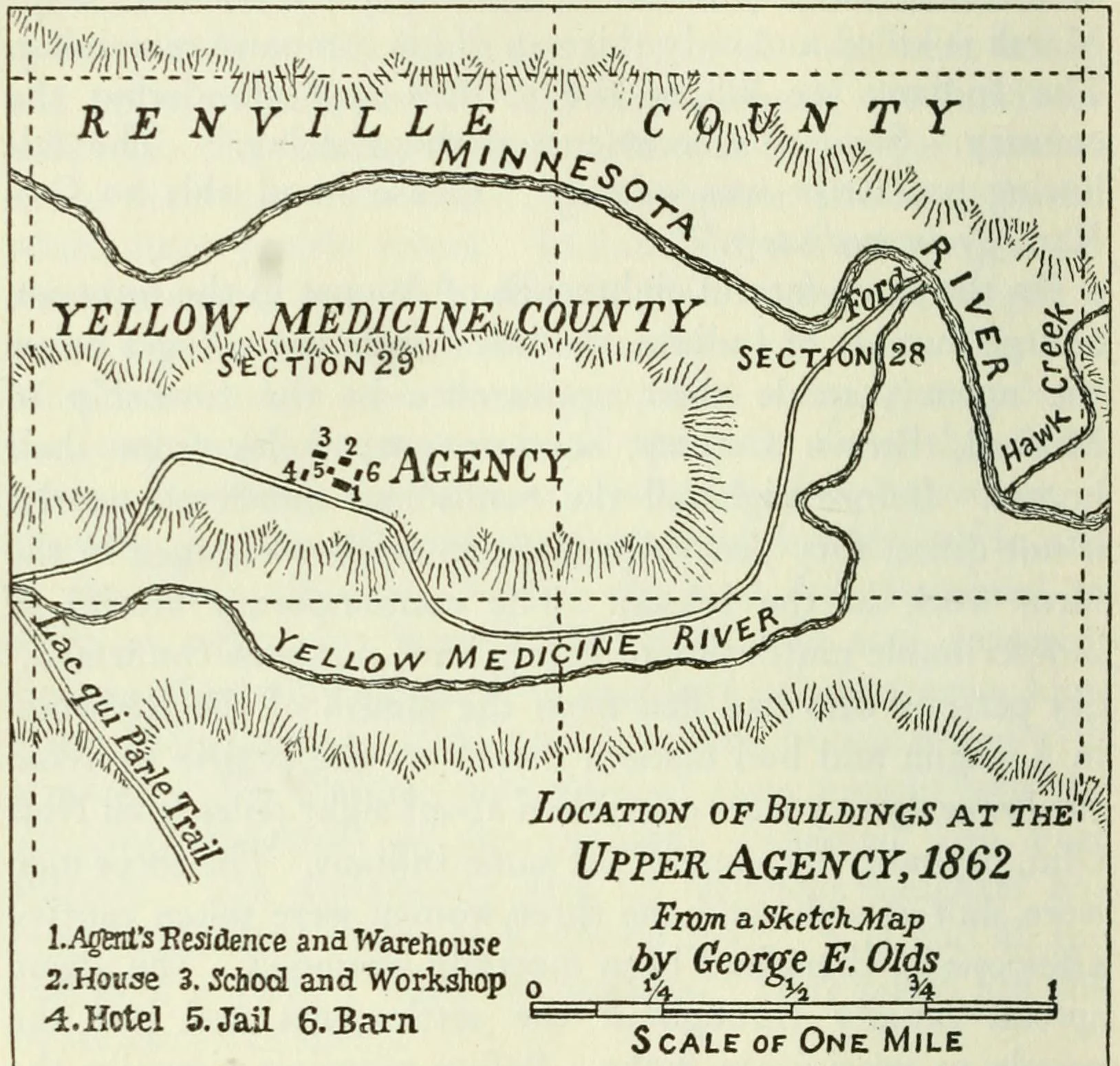
MapThe Upper Agency at Yellow Medicine
Upham’s map locates agency buildings, the river, and nearby roads around the Upper Agency.
Warren Upham, in William Watts Folwell’s A History of Minnesota, vol. II (1924), p. 116 · Public domainRelated history
Sources
- Dakota accounts and interpretation · Minnesota Historical Society The Dakota Peace Party
- Dakota eyewitness account · Minnesota Historical Society Collections, 1905 Tiwakan (Gabriel Renville) recounts the war
- Dakota and settler-descendant accounts · Minnesota Historical Society Mni Sota Wakpa Stories and Reflections
- Military dispatches · Minnesota in the Civil and Indian Wars, vol. II Camp Release reports, pp. 254–256
- Historic site interpretation · Minnesota Historical Society Fort Snelling and the U.S.–Dakota War
- Seventh Minnesota company record · National Park Service Seventh Minnesota Company G diary, PDF pp. 1–2
- Biographical account · Minnesota Historical Society Aŋpétu Tȟokéča (John Other Day)
- Historical map, 1924 · William Watts Folwell, A History of Minnesota, vol. II, p. 116 The Upper Agency at Yellow Medicine