First Minnesota Mounted Rangers
October 1862–December 1863
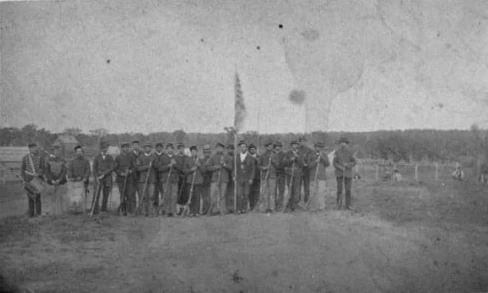
The Mounted Rangers formed after the main battles of 1862. Companies patrolled and garrisoned posts and joined Sibley’s expedition into Dakota Territory in 1863.
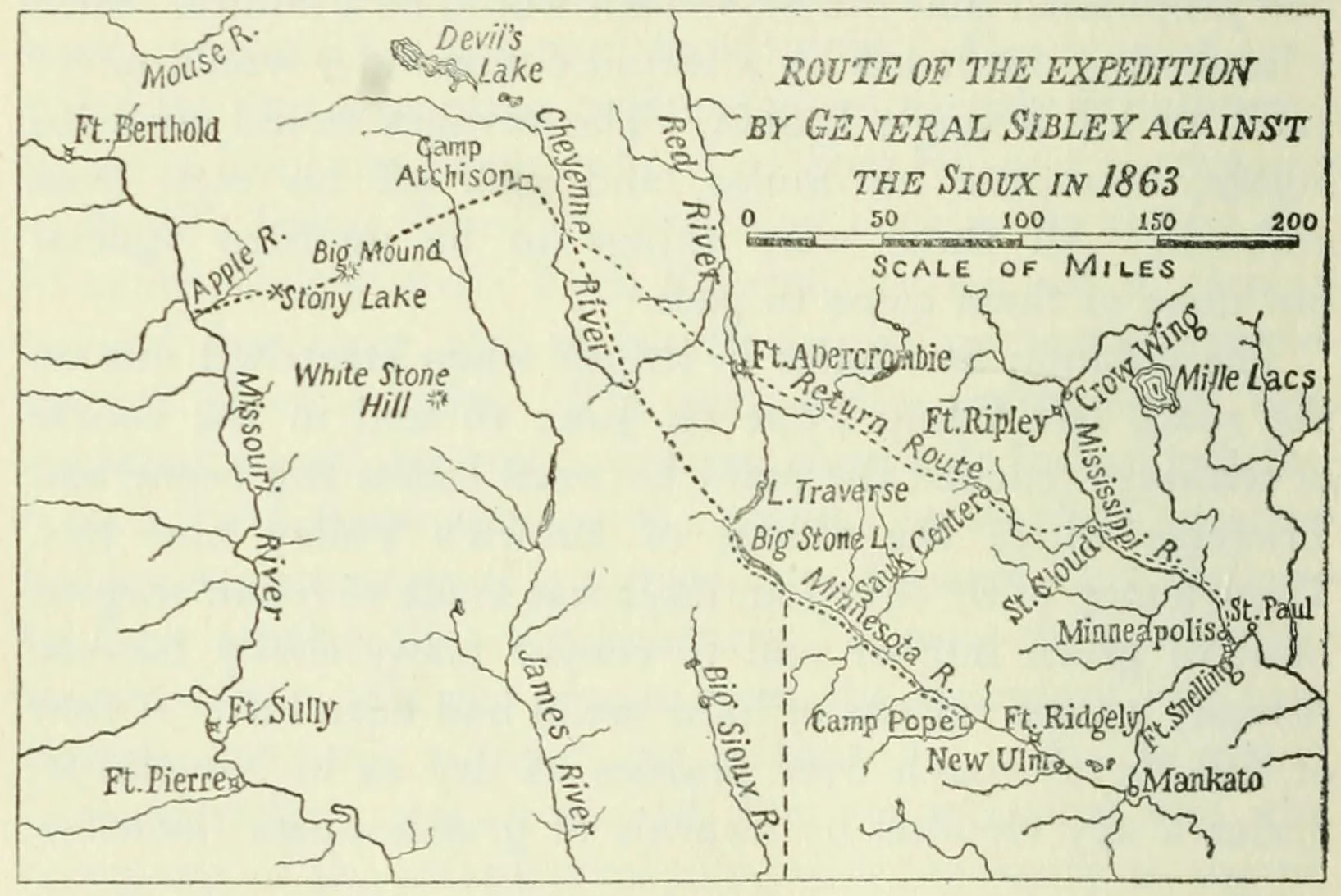
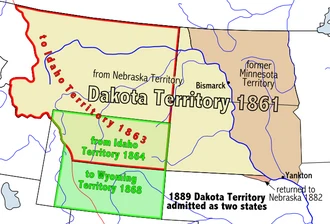
The map traces camps and engagements across present-day North Dakota, west to the Missouri River.
Warren Upham, in William Watts Folwell’s A History of Minnesota, vol. II (1924), p. 268 · Public domainHistory
Formation after the September battles
The First Minnesota Mounted Rangers organized by companies in fall 1862. Its name can be confused with the mounted militia called “rangers” in August and September dispatches. The formal regiment organized after Birch Coulee and Wood Lake.
Campaign and disbandment
The Rangers served at Minnesota posts and accompanied Sibley into Dakota Territory. At Big Mound, mounted companies and infantry fought as Dakota people fled west. The Rangers took part in the pursuit to the Missouri River and mustered out by companies in late 1863.
Timeline
October–December 1862Mounted companies organize
Companies mustered for frontier duty.
June–July 1863Sibley’s westward expedition
The Rangers rode with infantry and artillery as far as the Missouri River.
Sibley’s Dakota Territory expeditionView Sibley’s 1863 route in Dakota Territory
October–December 1863Muster-out
The regiment mustered out by companies after returning from the expedition.
Images and records
MapSibley’s 1863 route in Dakota Territory
The map traces camps and engagements across present-day North Dakota, west to the Missouri River.
Warren Upham, in William Watts Folwell’s A History of Minnesota, vol. II (1924), p. 268 · Public domainRelated history

Sources
- Archival research guide · Minnesota Historical Society First Minnesota Mounted Rangers records
- Military service summary · National Park Service 1st Minnesota Mounted Rangers service record
- Military dispatches · Minnesota in the Civil and Indian Wars, vol. II Birch Coulee reports and casualty roll, pp. 212–223
- Historic site interpretation · State Historical Society of North Dakota Big Mound, including Charles Eastman’s account
- Historic site interpretation · State Historical Society of North Dakota Sibley’s 1863 expedition camps and routes