Naval Construction Forces (Seabees)
Established 1942
The Navy’s Seabees build and maintain bases, airfields, roads and waterfront facilities for forces operating ashore. Naval Construction Forces is a service-wide designation covering many individual battalions and commands.
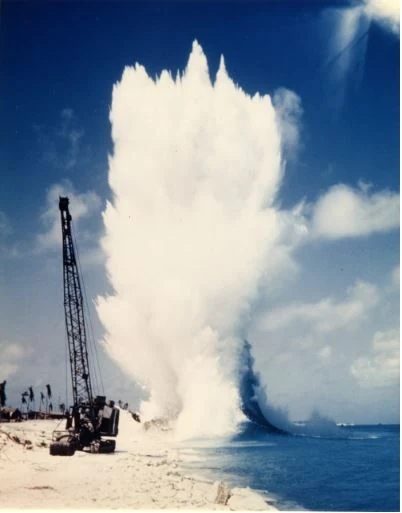
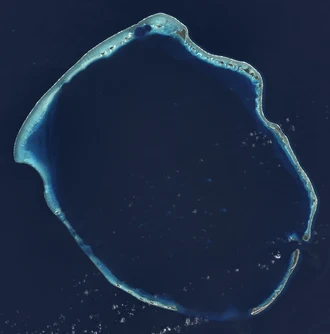
Navy construction personnel blast near the shore during airfield work at Eniwetok Atoll. The Seabee Museum dates this photograph to June 23, 1944.
U.S. Navy photograph / U.S. Navy Seabee Museum · U.S. government work, public domainHistory
Building the Pacific and Atlantic bases
The Navy organized construction battalions in January 1942 and approved the name Seabees in March. Early detachments recruited experienced builders and tradespeople. They could build roads, airfields, fuel storage and piers in places where civilian contractors could no longer work safely.
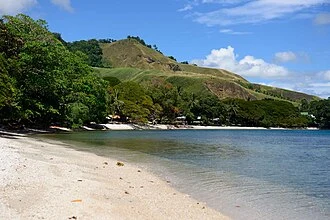
The first contingent reached Bora Bora in February 1942 to build a fueling base on Allied routes across the South Pacific. During the war, naval construction units built across both oceans and worked close behind amphibious landings. An official Navy photograph shows an Eniwetok airfield they built in 1944.
Pontoons in Korea, airfields in Vietnam and logistics in the Gulf
At Incheon in September 1950, the 104th Naval Construction Battalion, later designated Amphibious Construction Battalion One, used pontoon equipment to move vehicles and supplies across the tidal waterfront. In Vietnam, Seabees arriving at Chu Lai in May 1965 built an expeditionary Marine airfield. Other battalions developed roads, piers and bases and worked on local civic projects.
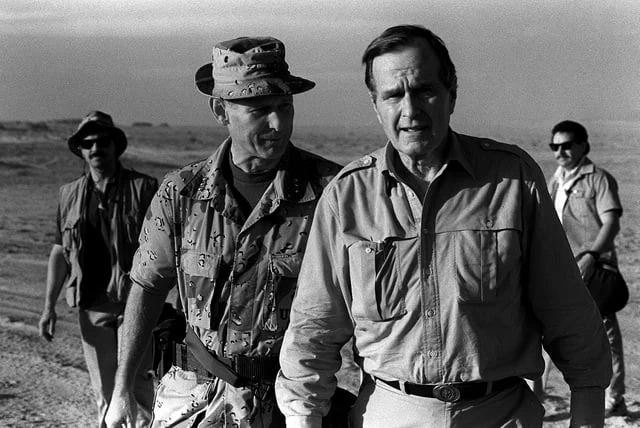
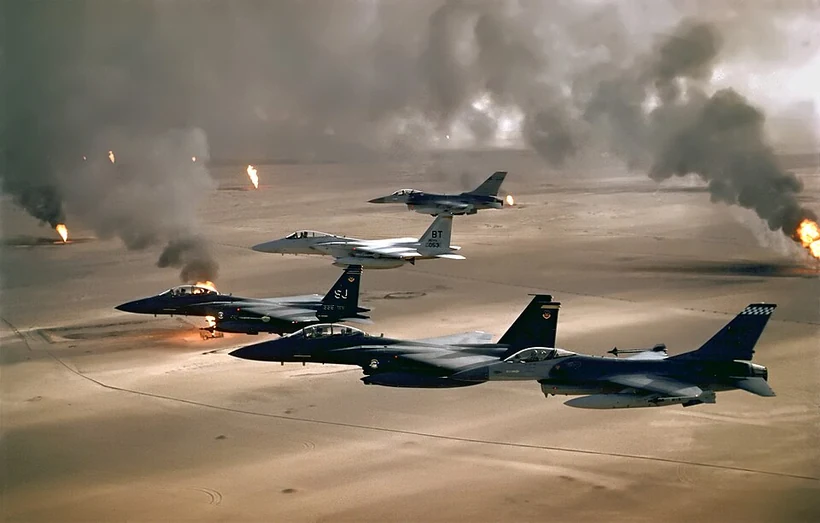
In 1990, Seabees helped unload equipment in Saudi Arabia and built camps, roads and supply facilities for Desert Shield and Desert Storm. These examples illustrate the work of the Naval Construction Forces. A service inscription identifying the Seabees can be narrowed to a specific battalion when a roster or service record is available.
Timeline
January 1942First naval construction units
The Navy authorized construction battalions and organized its first unit at Charleston.
February 1942Bora Bora fueling base
The first contingent reached the South Pacific to establish a naval fuel stop.
1944Built an Eniwetok airfield
A Navy photograph records the scale of construction work at the Pacific atoll.
September 1950Incheon landing support
The 104th Naval Construction Battalion provided pontoon facilities for troops, vehicles, and supplies. It became Amphibious Construction Battalion One in October.
May 1965Airfield at Chu Lai
The first Seabee battalion deployed to Vietnam reached Chu Lai and began work on a Marine airfield.
1990–1991Desert Shield and Desert Storm
The Seabees unloaded equipment and built infrastructure that supported the coalition’s buildup and operations.
Images and records
PhotographSeabees building the Eniwetok Atoll airfield in 1944
Navy construction personnel blast near the shore during airfield work at Eniwetok Atoll. The Seabee Museum dates this photograph to June 23, 1944.
U.S. Navy photograph / U.S. Navy Seabee Museum · U.S. government work, public domainRelated history

Sources
- Official Navy history, transcription · U.S. Navy Bureau of Yards and Docks via HyperWar Building the Navy’s Bases in World War II, Chapter 6
- Official Navy history, transcription · U.S. Navy Bureau of Yards and Docks via HyperWar Building the Navy’s Bases in World War II, Chapter 24
-
Archival photograph · U.S. Navy Seabee Museum, via Wikimedia Commons
Seabees blast near the shore at Eniwetok
Official U.S. Navy photograph via the National Archives. Received June 23, 1944.
-
Official Navy unit history · Commander, Naval Surface Force, U.S. Pacific Fleet
Amphibious Construction Battalion One history
Describes the September 1950 Incheon causeway and the unit’s October 1950 redesignation.
- Official campaign history · Marine Corps History and Museums Division U.S. Marines in Vietnam: The Landing and the Buildup, 1965
-
Official U.S. military history, agency copy · U.S. Department of Defense GulfLINK archive
History of the Seabees
See the Operation Desert Shield / Desert Storm section.
Veteran roster
Service references come from the wall inscriptions and approved public profiles.
5 veterans
| Veteran | Rank or rating | Military unit | Service period | Decorations, bases and places |
|---|---|---|---|---|
| Charles (Chuck) Larson Photographed face 12 · row 3, position 3 Highlight on the wall | Petty Officer Third Class (U.S. Navy) | Naval Construction Forces (Seabees) | — | Guam Okinawa |
| Edwin J Sweep Wall marked 5 · row 4, position 5 Highlight on the wall | Petty Officer Second Class (U.S. Navy) | Naval Construction Forces (Seabees) | — | — |
| Lester Reichenbach Wall marked 6 · row 2, position 1 Highlight on the wall | Petty Officer Second Class (U.S. Navy) | Naval Construction Forces (Seabees) | Vietnam War | Vietnam |
| Ryley D Haugen Wall marked 5 · row 4, position 1 Highlight on the wall | Petty Officer Third Class (U.S. Navy) | Naval Construction Forces (Seabees) | Operation Iraqi Freedom | — |
| Steven R Mettling Wall marked 8 · row 5, position 1 Highlight on the wall | Petty Officer Third Class (U.S. Navy) | Naval Construction Forces (Seabees) | Operation Deep Freeze | — |