Gulf War
August 1990 – April 1991
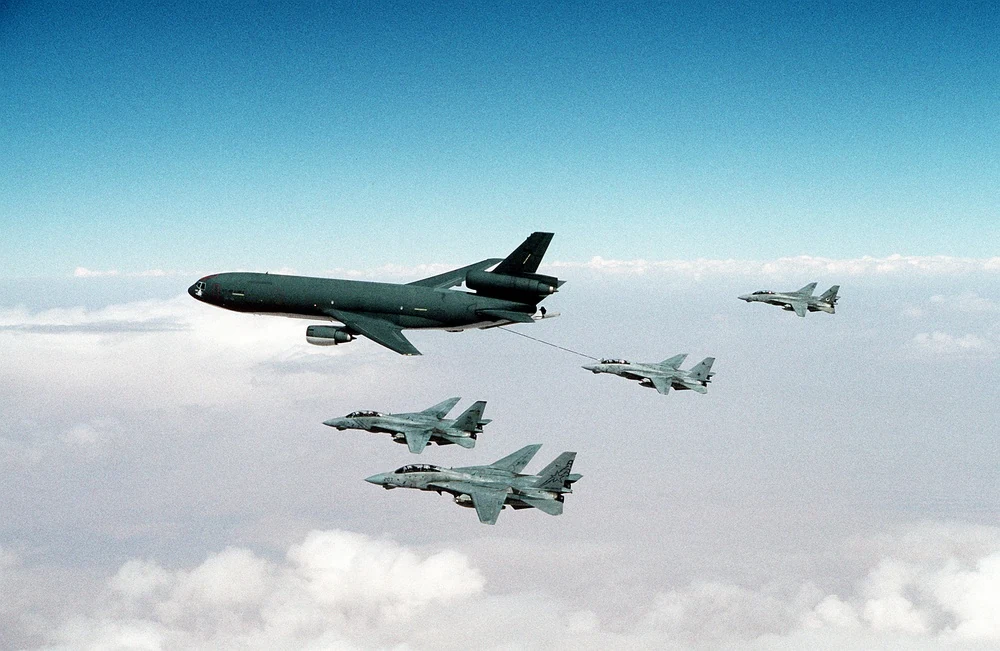
A U.S. Air Force KC-10A refuels a Navy F-14A on February 26, 1991. Aircraft from Fighter Squadrons 33, 84, and 14 appear in the formation.
U.S. Air Force, via DVIDS, image 2357954 · Public domainHistory
Invasion and coalition
After the Iran–Iraq War, Iraq and Kuwait disputed debts, oil production, and the border. Iraqi forces invaded Kuwait on August 2, 1990. The United Nations Security Council demanded their withdrawal and later authorized cooperating states to use force if Iraq failed to withdraw by January 15, 1991.
Operation Desert Shield brought U.S. and other forces to Saudi Arabia to defend it and build up the coalition. Kuwait and Saudi Arabia took part alongside other Arab countries and partners from outside the region.
Desert Storm and Minnesota service
The coalition opened an air campaign in January 1991. A ground offensive began on February 24. Coalition forces liberated Kuwait City and major combat stopped on February 28.
More than 600 members of the Minnesota National Guard volunteered or were activated, according to the state Guard’s history. Units included the 109th Aeromedical Evacuation Squadron and the 257th Military Police Company. Reserve units also supplied transportation, water, and other services that supported coalition operations.
The cost of occupation and war
The United Nations documented damage to Kuwait’s infrastructure and called for the release of detained Kuwaiti and other nationals. Retreating Iraqi forces set fire to Kuwaiti oil wells. Smoke spread across communities and the Gulf, and environmental cleanup continued after the fighting.
The Security Council established terms for a formal ceasefire in April, including measures to monitor the border and compensate for losses. The Library of Congress preserves accounts from veterans of different branches and roles.
Timeline
August 2, 1990Iraq invades Kuwait
Iraqi forces occupied Kuwait. That day the UN Security Council condemned the invasion and demanded immediate withdrawal.
August 1990Operation Desert Shield begins
The United States and coalition partners deployed forces to Saudi Arabia to deter further attacks and assemble the coalition.
November 29, 1990The Security Council sets a deadline
Resolution 678 authorized states cooperating with Kuwait to use force unless Iraq complied by January 15, 1991.
January 17, 1991 · Gulf local timeThe Desert Storm air campaign opens
Coalition aircraft struck targets in Iraq and Kuwait. The air campaign preceded the ground offensive.
February 24–28, 1991The ground offensive ends the occupation
Coalition ground forces attacked Iraqi positions, liberated Kuwait City, and halted offensive operations on February 28.
April 3, 1991The Security Council sets formal ceasefire terms
Resolution 687 provided for border monitoring and weapons inspections and established responsibility for losses, including environmental damage.
Images and records
PhotographA Navy F-14 refuels during Desert Storm
A U.S. Air Force KC-10A refuels a Navy F-14A on February 26, 1991. Aircraft from Fighter Squadrons 33, 84, and 14 appear in the formation.
U.S. Air Force, via DVIDS, image 2357954 · Public domain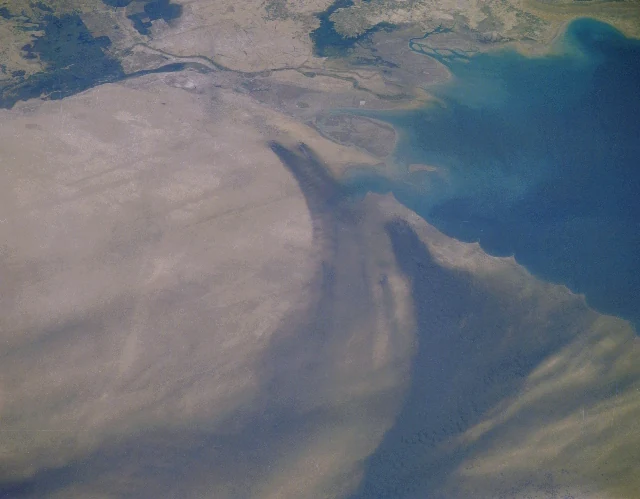
PhotographKuwait’s oil fires from orbit
An April 1991 Space Shuttle Atlantis photograph shows smoke spreading from Kuwait’s burning oil fields after the fighting.
NASA, Space Shuttle Atlantis mission STS-37, frame STS037-152-184 · Public domainRelated history

Sources
-
Official history · U.S. State Department, Office of the Historian
The Gulf War, 1991
Diplomatic background, the coalition, and military operations.
-
Official history · U.S. Army Center of Military History
The Persian Gulf War, 1990–1991
See chapter eight for operational dates.
-
Primary document · United Nations
Security Council Resolution 660
Demand for withdrawal, August 2, 1990.
-
Primary document · United Nations
Security Council Resolution 678
Authorization and January deadline.
-
Primary document · United Nations
Security Council Resolution 686
Provisions for detainees, property, and military talks.
-
Primary document · United Nations
Security Council Resolution 687
Ceasefire framework, border, and compensation.
-
Official history · Minnesota National Guard
Minnesota National Guard milestones
Units and personnel mobilized or volunteering for the Gulf War.
-
Official history · U.S. Army Reserve
Desert Shield and Desert Storm
Reserve call-up and logistics.
- Primary document · United Nations Secretary-General Report on damage to Kuwaiti infrastructure during the occupation
-
Official report · United Nations Compensation Commission
Kuwait environmental compensation follow-up
Environmental restoration projects.
-
Archival photograph · NASA Gateway to Astronaut Photography
Oil well fires, Kuwait
Astronaut photograph STS037-152-184, April 1991.
-
Archival photograph · Defense Visual Information Distribution Service
Desert Storm: F-14A refueling
February 26, 1991. The formation includes aircraft from VF-84.
-
Oral histories · Library of Congress Veterans History Project
The Persian Gulf War: 25 Years Later
Veterans’ experiences in the Gulf.
-
Video · Area Support Group–Kuwait, DVIDS
Desert Storm anniversary: The liberation of Kuwait
Firsthand accounts of the liberation.
Veteran roster
Service references come from the wall inscriptions and approved public profiles.
4 veterans
| Veteran | Rank or rating | Military unit | Service period | Decorations, bases and places |
|---|---|---|---|---|
| Brian Christian Photographed face 05 · row 1, position 2 Highlight on the wall | Petty Officer Third Class (U.S. Navy) | — | Gulf War | — |
| Douglas Sjerven Wall marked 5 · row 6, position 2 Highlight on the wall | Sergeant (U.S. Army) | — | Gulf War | — |
| Dwayne G Aanerud Photographed face 05 · row 5, position 4 Highlight on the wall | Chief Petty Officer (U.S. Navy) | — | Gulf War | Vietnam |
| Sarah B Fredell Photographed face 04 · row 6, position 1 Highlight on the wall | Captain (U.S. Army, Marine Corps, and Air Force) | — | Gulf War | — |