USS Hancock (CV-19/CVA-19)
1944–1976
USS Hancock launched fast-carrier strikes in World War II. Modernized with steam catapults and an angled flight deck, it served repeatedly off Vietnam and helped evacuate Saigon in 1975.
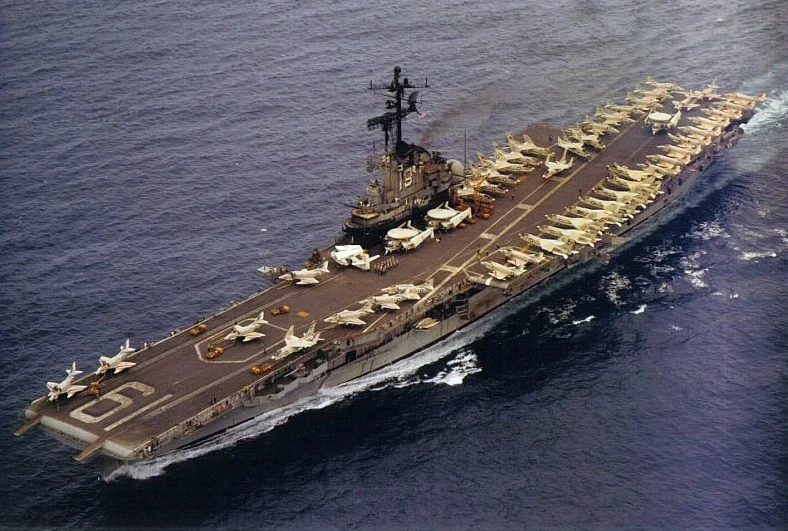
USS Hancock (CVA-19) off Pearl Harbor in 1968.
U.S. Navy, public domain · Public domainHistory
From Ulithi to the Japanese home islands
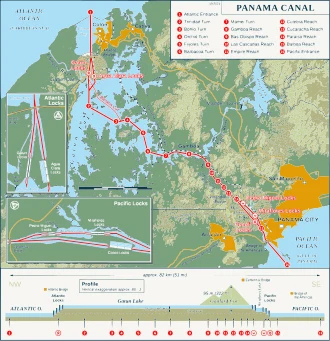
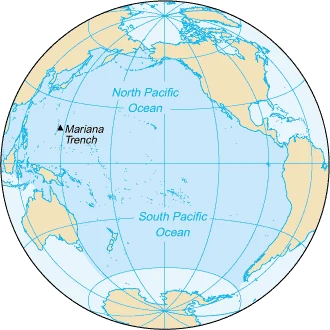
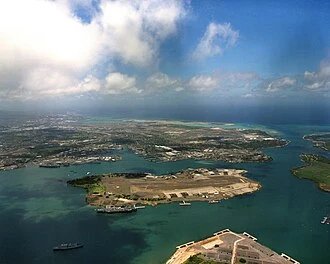
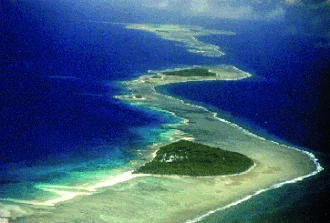
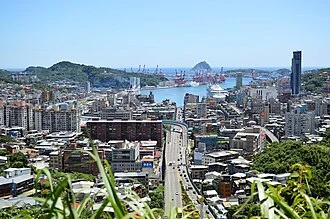
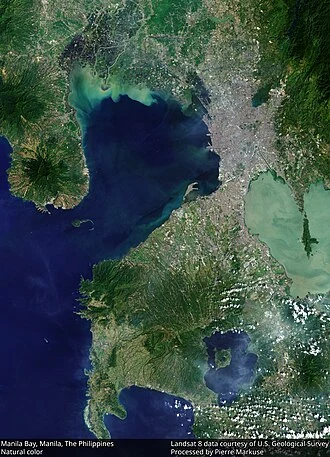
After commissioning in 1944, Hancock passed through the Panama Canal and reached the western Pacific via San Diego and Pearl Harbor. It joined Task Group 38.2 at Ulithi and operated against targets in the Ryukyus, Taiwan and the Philippines, then supported operations at Iwo Jima and Okinawa.
A kamikaze strike on April 7, 1945 killed 62 men and wounded 71. Following repairs at Pearl Harbor, the carrier returned to the fleet for attacks on Japan. After the surrender, its aircraft dropped supplies to Allied prisoners of war.
Steam catapults, Vietnam and the Saigon evacuation
Recommissioned in 1954 after modernization, Hancock conducted the U.S. fleet’s first steam-catapult launch in June. An angled flight deck followed in 1956, allowing modern jets to launch and land more safely. The carrier deployed during the Taiwan Strait crisis and later flew strike missions from the Gulf of Tonkin.
In April 1975, Hancock and Midway served as helicopter platforms during Operation Frequent Wind. Their flight decks gave helicopters a place to land after bringing evacuees out of Saigon.
Timeline
April 15, 1944Commissioned
The Essex-class carrier trained and moved from the East Coast to the Pacific.
October 5, 1944Joined Task Group 38.2
From Ulithi, the carrier flew missions across the western Pacific before and during operations in the Philippines.
April 7, 1945Hit off Okinawa
A kamikaze strike forced Hancock to withdraw for repairs at Pearl Harbor.
August 25, 1945Supplies to prisoner-of-war camps
June 17, 1954Steam-catapult launch
Hancock conducted the U.S. fleet’s first aircraft takeoff using a steam catapult.
1964–1966Vietnam deployments
The carrier served at Yankee Station in the Gulf of Tonkin and made further combat deployments.
April 29–30, 1975Operation Frequent Wind
Hancock launched the first evacuation helicopters from about 17 miles off Vung Tau. The helicopters carried people from Saigon to ships offshore.
Images and records
PhotographUSS Hancock (CVA-19) off Pearl Harbor in 1968
USS Hancock (CVA-19) off Pearl Harbor in 1968.
U.S. Navy, public domain · Public domainRelated history


Sources
-
Official ship history, archived web copy · Naval History and Heritage Command via the Internet Archive
Hancock IV (CV-19)
Archived Navy entry for the World War II, modernization, and early Vietnam chronology.
-
Official Navy reference, depository library copy · U.S. Naval Historical Center via Indiana University Bloomington Libraries
United States Naval Aviation, 1910–1995, Appendix 26
The carrier and air-wing deployment tables record Hancock’s 1965 and 1966 Vietnam assignments.
-
Official Marine Corps history · U.S. Marine Corps History and Museums Division
U.S. Marines in Vietnam: The Bitter End, 1973–1975
Frequent Wind chapter and naval deployment map show Hancock and Midway off Vung Tau.
-
Official ship history, archived web copy · Naval History and Heritage Command via the Internet Archive
Dubuque II (LPD-8)
The April 1975 narrative locates Hancock’s first evacuation launches off Vung Tau.
Veteran roster
Service references come from the wall inscriptions and approved public profiles.
1 veteran
| Veteran | Rank or rating | Military unit | Service period | Decorations, bases and places |
|---|---|---|---|---|
| Randy D Sieckert Wall marked 6 · row 2, position 3 Highlight on the wall | Petty Officer Third Class (U.S. Navy) | USS Hancock (CV-19/CVA-19) | Vietnam War | Vietnam |