6th Infantry Division
1917–1945 focus
The Red Star division mobilized at Fort Leonard Wood, fought near Sarmi in New Guinea, and campaigned across Luzon from the January 1945 landings through Japan’s surrender.

The 6th Infantry Division’s red six-pointed star.
U.S. Army insignia. Digital reproduction by Crotalus horridus, public domain. · Public domainHistory
The first Red Star division
The Army organized the 6th Division at Camp McClellan, Alabama, in 1917. It reached France in 1918, served in the Vosges and moved to the Meuse–Argonne area as the war ended. The Army’s medical history describes its composition and overseas service.
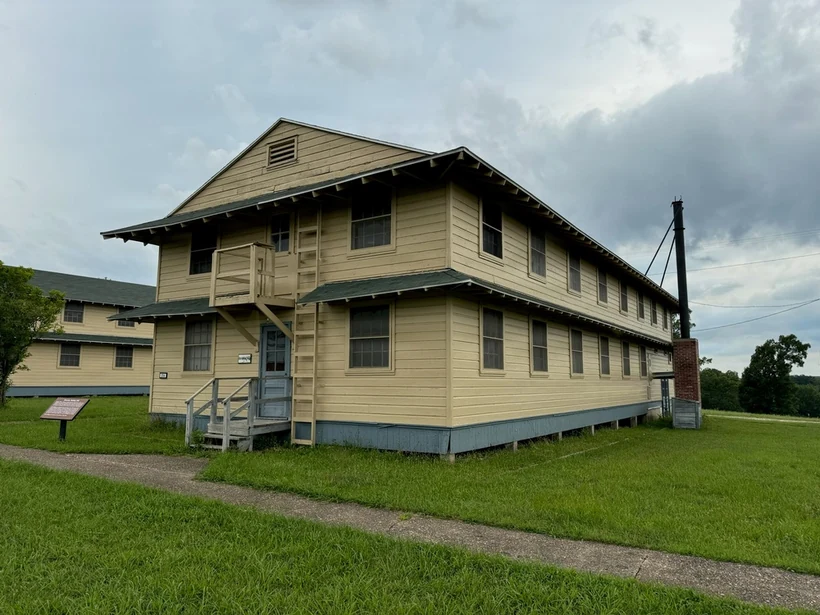
During the mobilization for World War II, troops of the division were the first to train at the newly opened Fort Leonard Wood. The 63rd Infantry joined the division there in 1941. The numbered infantry regiments were separate organizations with different movements and assignments within the division.
New Guinea and Lone Tree Hill
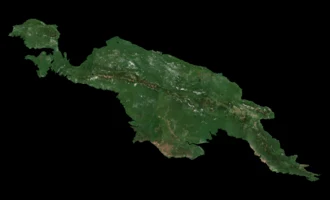
In June 1944 the division relieved the 158th Regimental Combat Team in the Wakde–Sarmi sector. Fighting for Lone Tree Hill unfolded on a steep, forested coastal position where Japanese troops used caves and defenses. The 20th Infantry took the lead in the fight for the hill while the division cleared adjacent positions and held the lodgment.
Across Luzon
The division landed at Lingayen Gulf on January 9, 1945, as part of Sixth Army. While the detached 63rd fought toward Rosario, other divisional units screened the inland advance and moved through the Cabaruan Hills, Muñoz and San Jose. The division then reached Baler and Dingalan bays on the island’s east coast.
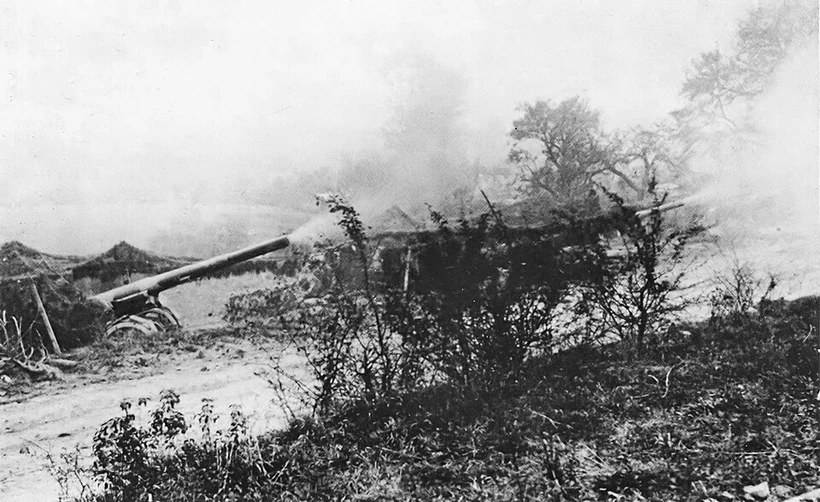
The operation continued on several axes. The 1st Infantry moved onto the Bataan Peninsula while other divisional units fought against the Japanese Shimbu defensive line east of Manila. In the final months the division moved north to fight in the mountains. Its wartime report summarizes the campaign from January 9 through August 15, 1945.
Timeline
1917–1918Organization and service in France
The division organized at Camp McClellan and reached France in 1918, operating in the Vosges and later the Meuse–Argonne area.
1941Fort Leonard Wood
The division trained at the new Missouri post and gained the 63rd Infantry during the mobilization.
June 1944Lone Tree Hill
The 6th took over the Sarmi sector. Its 20th Infantry fought for a jungle-covered hill controlling local movement.
January 9, 1945Lingayen Gulf landings
Most of the division pushed inland, while the 63rd, initially a corps reserve, joined the fighting around Rosario.
February–August 1945Across Luzon and into the mountains
The division reached the east coast, fought on the Shimbu Line and moved into the northern mountains before Japan surrendered.
Images and records
PhotographThe 6th Infantry Division’s red six-pointed star
The 6th Infantry Division’s red six-pointed star.
U.S. Army insignia. Digital reproduction by Crotalus horridus, public domain. · Public domainRelated history

Sources
- Official divisional history · U.S. Army Medical Department Center of History and Heritage Medical Department history, combat divisions in World War I
- Official history · U.S. Army Fort Leonard Wood History of Fort Leonard Wood
-
Official campaign history · U.S. Army Center of Military History
The Approach to the Philippines
The Wakde–Sarmi chapters distinguish the participating regiments and their objectives.
- Official history · U.S. Army Center of Military History New Guinea campaign
-
Contemporary after-action report · U.S. Army Maneuver Center of Excellence Libraries
6th Infantry Division after-action report on Luzon
See the campaign summary and the chapters on Rosario, the Shimbu Line and the northern mountains.
-
Official campaign history · U.S. Army Center of Military History
Triumph in the Philippines, Chapter VI, Securing the Beachhead
The Army’s campaign history is reproduced by HyperWar. See pp. 105–109 for the 63rd Infantry’s advance on Rosario.