Attack on Pearl Harbor
December 7, 1941
Japanese carrier aircraft attacked the U.S. Pacific Fleet and airfields across Oʻahu. Sailors, soldiers, Marines, and civilians were killed, and the attack brought the United States into World War II.
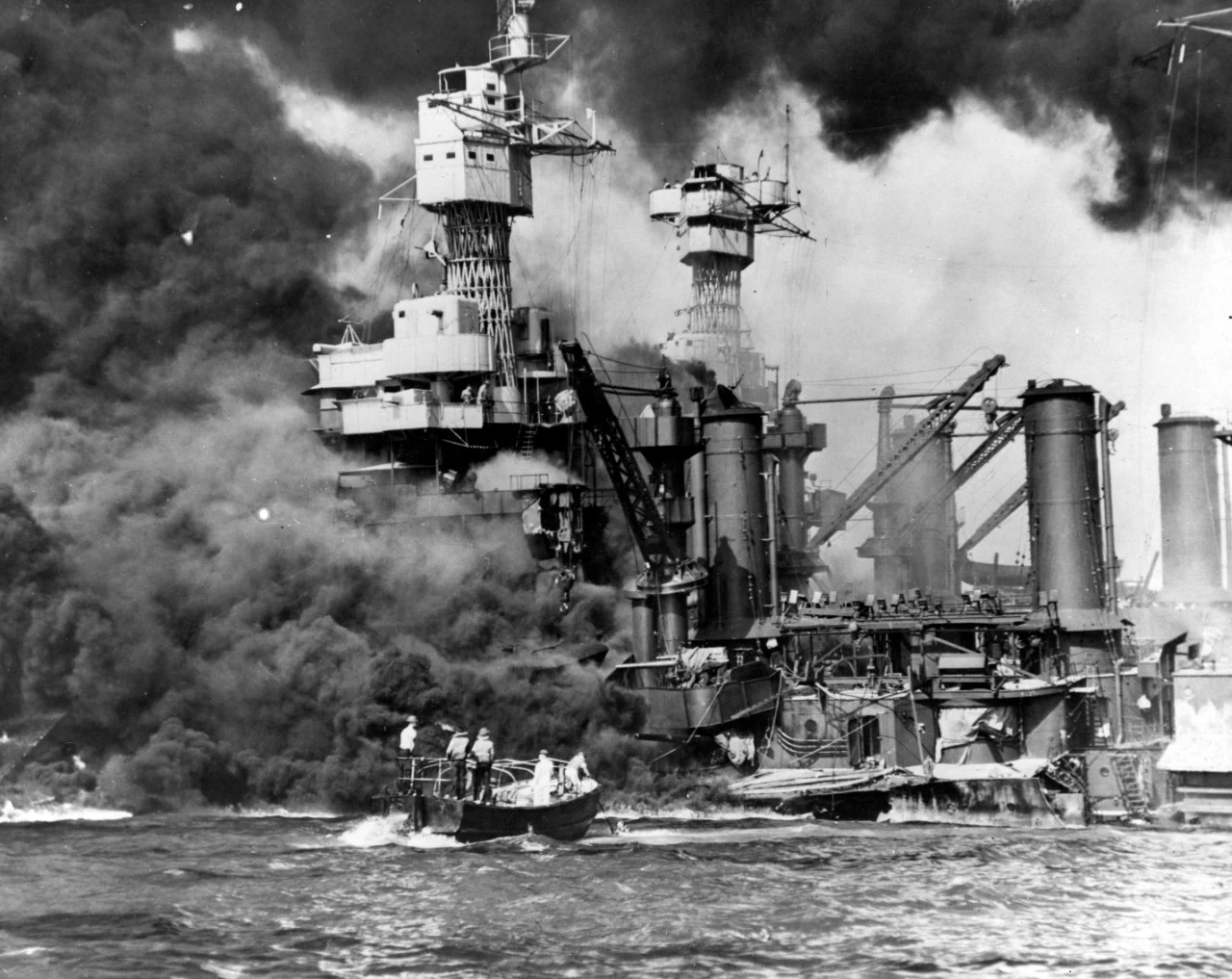
A motor launch approaches the burning battleship after torpedoes struck it at its berth.
U.S. Navy · Naval History and Heritage Command via NPS · U.S. public domainHistory
A fleet and its airfields
Pearl Harbor’s anchorage and shipyard supported the Pacific Fleet. Battleship Row lay along Ford Island, which also held naval aviation facilities. Other military targets included Wheeler and Hickam fields and the naval air station at Kāneʻohe Bay.
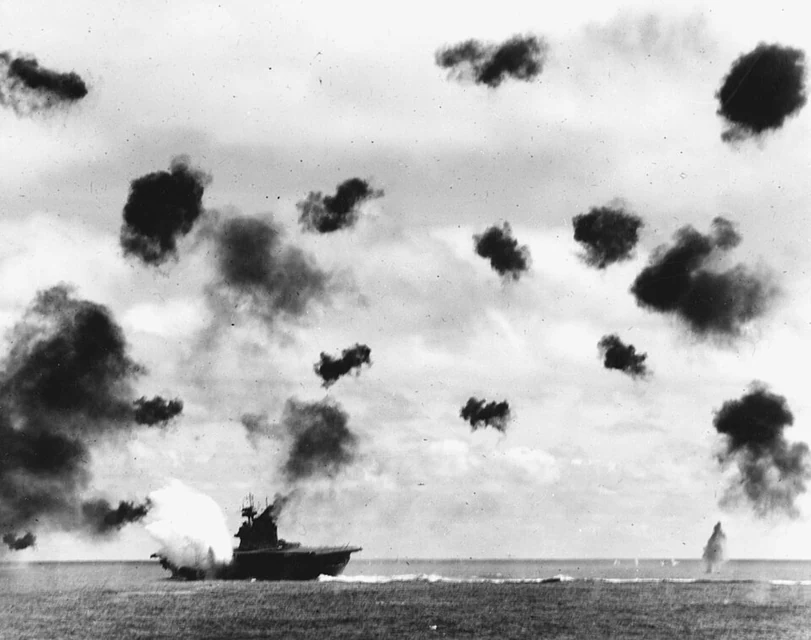
Aircraft from six Japanese carriers attacked in two waves. The first struck shortly before 8 a.m. local time. Torpedoes hit battleships as bombers attacked the harbor and airfields.
People on the island
Crew members fought fires, rescued shipmates, and tried to bring guns into action. A bomb penetrated USS Arizona and its forward magazines exploded. USS Utah capsized on the other side of Ford Island.
Doris Miller helped wounded sailors and took up an antiaircraft gun aboard USS West Virginia. Admiral Chester W. Nimitz later presented him with the Navy Cross. Civilian residents across Oʻahu also suffered deaths and injuries.
From attack to remembrance
Congress declared war on Japan on December 8 after President Franklin D. Roosevelt’s address. Germany and Italy declared war on the United States on December 11.
The memorial’s site histories and virtual USS Utah tour make it possible to explore where ships lay and how survivors and rescue crews responded.
Timeline
October 10, 1941Ford Island before the attack
An aerial photograph shows the runway, naval facilities, and the shore where battleships moored.
Early morningU.S. crews encounter signs of the approaching force
USS Ward attacked a Japanese midget submarine outside the harbor. Army operators at Opana detected approaching aircraft by radar.
About 7:55 a.m.First-wave aircraft strike
Aircraft attacked ships and installations around the island. Torpedo bombers struck Battleship Row.
About 8:06 a.m.USS Arizona explodes
An armor-piercing bomb struck the battleship. The explosion and sinking killed 1,177 crew members.
About 8:50 a.m.Second-wave aircraft attack
The second wave struck ships and airfields. At the navy yard, fires and damaged ships blocked or threatened rescue and repair efforts.
December 8, 1941The United States declares war on Japan
Roosevelt addressed a joint session of Congress, which approved a declaration of war that day.
Images and records
PhotographUSS West Virginia during the attack
A motor launch approaches the burning battleship after torpedoes struck it at its berth.
U.S. Navy · Naval History and Heritage Command via NPS · U.S. public domain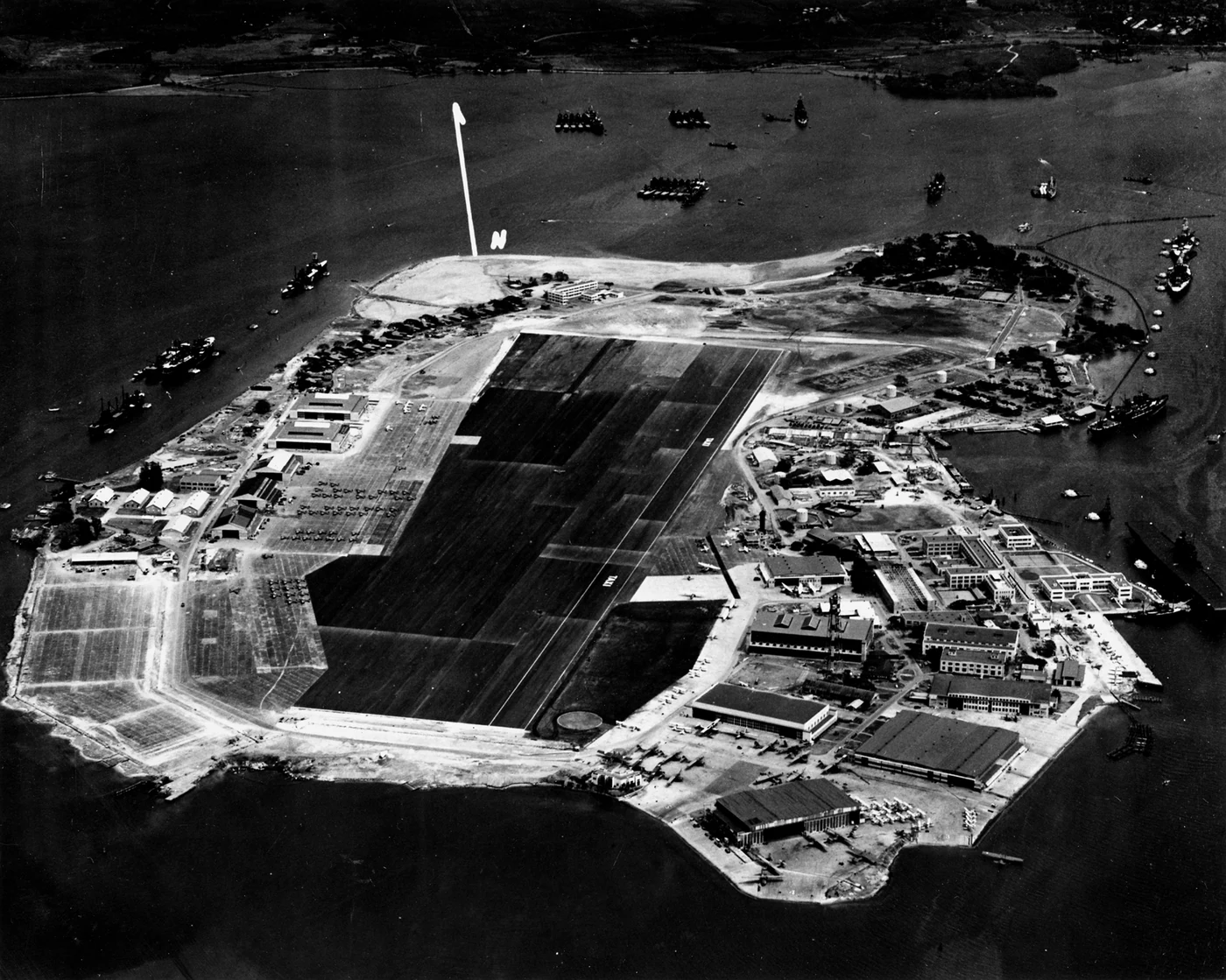
PhotographFord Island before the attack
The October 10, 1941 aerial view looks north over Ford Island. Battleship Row was along the shoreline on the right.
National Park Service · Pearl Harbor National Memorial · U.S. public domain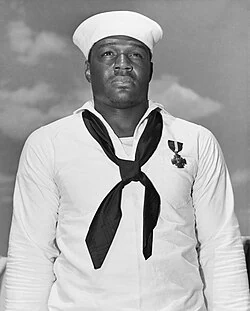
PhotographDoris Miller receives the Navy Cross
Admiral Chester W. Nimitz presented Miller with the Navy Cross on USS Enterprise on May 27, 1942.
U.S. Navy · Naval History and Heritage Command via NPS · U.S. public domainRelated history
Sources
- History · National Park Service Pearl Harbor and U.S. entry into the war
- Timeline · National Park Service Attack timeline and historic photographs
- Places and accounts · National Park Service Battlefield Oʻahu
- Places · National Park Service Places at Pearl Harbor
- Archival photograph · National Park Service Ford Island on October 10, 1941
- Virtual exhibit · National Park Service USS Utah Memorial and virtual tour
- Civilian history · National Park Service Civilian impact of the attack
- Original document · National Archives Roosevelt’s address to Congress
- Chronology · Army Center of Military History Chronology of U.S. Army history